Choosing the best erosion control blanket in 2026 starts with the ground it must protect. A short, sunny slope with sandy soil presents different demands than a steep bank exposed to intense rain. The blanket should slow runoff, hold soil in place, and allow plants to establish. That matters. Straw, wood fiber, coir, and synthetic products can perform differently as they break down, so material choice should reflect the site and the required protection period.
Look closely at slope length, soil type, expected rainfall, and the seed mix. Check product specifications for service life, coverage, anchoring, and installation guidance. A product sheet can help, but it cannot replace a site assessment. Some details are easy to miss, especially water moving beneath a poorly secured edge. On steep or sensitive ground, recommendations from a qualified erosion-control professional can help confirm the choice. Compare products on performance and fit, not price alone. A lower-cost blanket may need more frequent replacement.
This guide explains how to weigh those factors and choose an erosion control blanket for real site conditions. It also considers biodegradable options, reinforced designs, and practical installation details. No blanket suits every project. Even careful comparisons leave some uncertainty, because weather and soil behavior can change after installation. The aim is a well-supported decision, not a perfect promise: match the product to the site, follow its installation instructions, and monitor the area as vegetation grows.
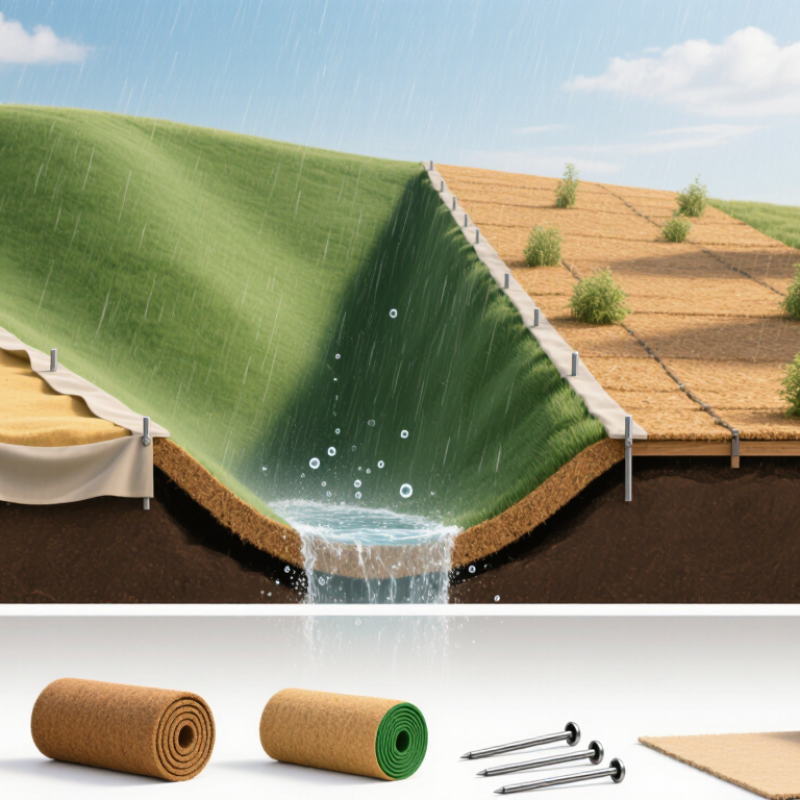
An erosion control blanket is a protective layer placed over exposed soil on slopes, channels, or newly seeded ground. Its fibers absorb some of the force from falling rain and help slow shallow runoff. Without that cover, raindrops can loosen fine soil, while moving water carries it downhill. The blanket’s texture also catches small particles before they wash away. The soil stays put. Mostly.
As water moves across the surface, the blanket reduces its speed and gives seeds and young roots a more stable place to grow. Roots gradually bind the soil, while the blanket continues to limit surface erosion. Some blankets are made from natural fibers that break down over time; others use longer-lasting materials for sites that need extended protection. Performance depends on proper contact with the ground. Gaps, loose edges, or poor anchoring can let water flow underneath and lift the material. That detail is easy to underestimate. Check the slope, expected runoff, and vegetation plan before choosing a blanket, then inspect it after heavy rain. A blanket can help, but it cannot fix a drainage problem by itself.
Before choosing an erosion control blanket, inspect the site after rain if possible. Water leaves useful evidence. Note where runoff begins, where it concentrates, and where sediment collects. Walk the full slope, not just its upper edge. A shaded hollow may stay wet, while exposed soil can dry and crust within hours. Check soil texture by hand: loose sand, silty soil, and clay behave differently under flowing water.
Measure the slope’s length and steepness, then identify drainage outlets and areas receiving concentrated flow. A blanket can protect exposed soil, but it may not control water rushing through a ditch or down a narrow channel. That distinction matters. Look for existing vegetation, bare patches, rills, and signs of recent undercutting. Consider expected rainfall and how long plants may take to establish. These clues help indicate whether temporary protection or a more durable, longer-lasting material is appropriate.
Match the blanket’s expected service life and degradability to site conditions and the vegetation plan. Check that its recommended installation method suits the soil and slope; poor anchoring can let water lift the edges. Photograph problem areas and record measurements before work begins. No field note predicts every storm, and I would revisit the assessment after heavy rain. A small overlooked drainage path can change the choice.
How to Choose the Best Erosion Control Blanket in 2026?
Compare Blanket Materials, Strength, and Service Life
Material choice should match the slope, runoff, and time needed for vegetation to establish. Straw blankets are light and typically suited to short-term protection. Coconut-fiber blankets are heavier and often remain functional longer; synthetic netting may add strength but can persist after natural fibers break down. These are practical tendencies, not guarantees. Check the product’s tested service-life range and installation requirements.
Strength matters most where water concentrates. FHWA’s HEC-15 design guidance evaluates flexible channel linings by permissible shear stress, measured in pounds per square foot. That is more useful than choosing by fiber type alone. For slope performance, ASTM D6459 provides a standardized test method; ASTM D6460 addresses channel applications. Compare test results under relevant conditions, including slope angle and expected flow. A blanket can look robust in hand, yet fail if it is poorly anchored.
Tips: Match the blanket’s service life to the time your plants need to establish. Check tensile strength, coverage, and anchoring details in the technical sheet. ECTC guidance distinguishes functional-life categories, so compare declared ranges rather than assuming all coir or straw products last alike. Small details matter: loose staples or exposed edges can let runoff lift the mat. Even careful selection has limits; site preparation is easy to underestimate.
Compare typical service life and relative material strength across common blanket materials.
Service-life bars show the midpoint of broad, approximate ranges: straw 3–12 months, jute 6–18 months, wood excelsior 12–24 months, and coir 24–36 months. Strength is a qualitative material-level rating from 1 (lower) to 5 (higher), not a measured product tensile-strength value. Actual performance depends on blanket construction, site conditions, installation, and specifications; compare tested product data for a project.
Choosing an erosion control blanket starts with the site, not the product label. Check slope angle, slope length, soil type, expected rainfall, and how quickly vegetation can establish. A short, gentle slope with stable soil may need less reinforcement than a long, exposed embankment. Steeper ground or concentrated runoff usually calls for stronger erosion resistance and secure anchoring. Don’t guess. Compare the blanket’s rated service life and erosion-control performance with the project drawings and site conditions.
Temporary protection may suit a site where plants will establish quickly. Where vegetation takes longer, select a blanket designed to remain effective for that period. Check fiber composition, mesh construction, tensile strength, and degradation time; these affect how the material performs and breaks down. Then confirm installation details, including staple type, spacing, and overlaps. A gap at the edge can let water get underneath. One detail is easy to miss: a specification sheet cannot account for every patch of loose soil or unexpected runoff. Review the choice with the project engineer, and adjust the installation plan when field conditions differ.
| Blanket type | Typical functional longevity | Best suited project conditions | Key selection considerations | Installation and maintenance checks |
|---|---|---|---|---|
| Straw fiber blanket | Short-term; actual breakdown time varies with product construction, climate, and site conditions. | Seeded slopes and disturbed areas where vegetation is expected to establish relatively quickly and long-term cover is not required. | Check the product’s stated longevity, netting material, slope application limits, and tested hydraulic performance. Straw products are generally not the first choice for prolonged exposure or demanding flow conditions. | Prepare and seed the soil as specified; ensure full soil contact, secure overlaps, and anchor the blanket according to the installation instructions. |
| Straw and coconut fiber blend | Intermediate; varies by the fiber blend, blanket weight, stitching, and exposure. | Projects needing more persistence than a short-term straw blanket, such as slopes with a longer vegetation-establishment period. | Compare the stated service life and applicable slope and flow ratings rather than relying on fiber blend alone. Confirm that the selected product is approved for the project’s design conditions. | Verify that the blanket is anchored at the crest and toe where required, with joints and edges secured to prevent water from getting underneath. |
| 100% coconut (coir) fiber blanket | Longer-term natural-fiber option; degradation rate depends on product design and site exposure. | Sites where vegetation may take longer to establish or where longer-lasting temporary surface protection is specified. | Check the manufacturer’s tested hydraulic ratings, stated longevity, and installation details. A longer-lasting fiber does not by itself establish suitability for a particular flow or slope. | Use the specified anchoring pattern and trenching details. Inspect after significant runoff and repair displaced sections promptly. |
| Excelsior (wood fiber) blanket | Temporary protection; product life depends on the wood fiber, netting, stitching, and site conditions. | Seeded slopes and channels where a wood-fiber matrix is specified to help hold seed and protect the soil surface. | Confirm the product’s intended slope or channel use and its tested flow-related performance. Check whether the netting is degradable or persistent and whether that is acceptable for the site. | Install in the direction and pattern specified for the application; secure the edges and overlaps, and keep the blanket in contact with the prepared soil. |
| Biodegradable fiber blanket with natural-fiber netting | Temporary; the fibers and netting may break down at different rates. | Projects where reducing persistent plastic mesh is a priority, subject to the site’s erosion-control design requirements. | Read the material description carefully: “biodegradable” does not guarantee a particular breakdown time. Confirm netting composition, expected persistence, wildlife considerations, and applicable performance ratings. | Follow the specified staple spacing and overlap details. Check that no loose edges or exposed netting can lift or snag during establishment. |
| Blanket with synthetic reinforcement | Depends on the synthetic components; some may remain after natural fibers degrade. | Applications where the project design calls for additional reinforcement and the selected product has suitable documented performance. | Review the full material composition, design life, hydraulic test data, and end-of-life requirements. Persistent mesh may require removal or other management, depending on the specification and site. | Confirm the product is permitted by the project specification and install exactly as designed. Inspect for exposed, loosened, or damaged mesh. |
Selection note: Match the blanket to the site’s slope, soil, runoff or channel flow, vegetation-establishment period, and required design life. Use project specifications and manufacturer-tested performance data for allowable shear stress or flow velocity; blanket type alone is not a design rating. Proper soil preparation, seeding, anchoring, and installation are essential.
Choosing the best erosion control blanket in 2026 starts with the slope, soil, and expected water flow. Before ordering, note the slope length, soil texture, and places where runoff gathers. A steep bank with concentrated flow needs a different approach from a level, lightly disturbed area.
Check the installation instructions for trenching, overlaps, and staple spacing. These details affect whether the blanket stays in contact with the soil.
Installation matters.
On site, a blanket that looks suitable in a sample can be awkward to secure on rocky ground. Check access, available tools, and whether crews can anchor the edges before rain arrives.
Environmental requirements are site-specific. Confirm that the blanket’s fibers and netting suit the project’s soil, vegetation, and expected service life. Ask for product documentation on material composition and degradation, then compare it with local project specifications.
Avoid assuming that “biodegradable” means residue-free or appropriate for every habitat. Some netting can remain after the fibers break down.
That detail is easy to overlook.
Check applicable environmental standards and permit conditions with the project authority, and record the approved installation method.
If the ground is already wet or uneven, pause and reassess; a neat drawing may not reflect field conditions.