Choosing weed barrier fabric is not as simple as comparing prices or thickness. The right material can reduce hand weeding, protect planting areas, and keep paths looking orderly. The wrong one may trap moisture, tear around sharp stones, or become visible beneath shifting mulch.
This guide explains ten practical tips for making a better purchase. It considers fabric type, water movement, sunlight resistance, installation strength, and long-term maintenance. Woven fabric often suits vegetable beds and landscape areas because it allows water exchange while limiting light. Nonwoven materials may work better beneath gravel paths, although their performance depends on soil conditions and traffic.
Measure carefully.
A roll that seems economical may create unnecessary seams. Those seams can become openings for persistent weeds. Check the product label for dimensions, permeability information, UV protection, and recommended applications. Manufacturer claims should be compared with independent gardening guidance and the conditions in your own yard.
Experience also reveals an uncomfortable detail: weed barrier fabric does not eliminate maintenance. Wind can uncover edges. Soil can collect on top. Aggressive plants can exploit tiny gaps. Good preparation remains essential, including removing existing weeds, leveling the ground, and securing the fabric with sturdy landscape pins.
Think beyond installation day. A durable choice should support healthy drainage, manageable upkeep, and the appearance you want after several seasons. Some decisions still require judgment. Your soil, climate, plants, and ground cover may change the answer.
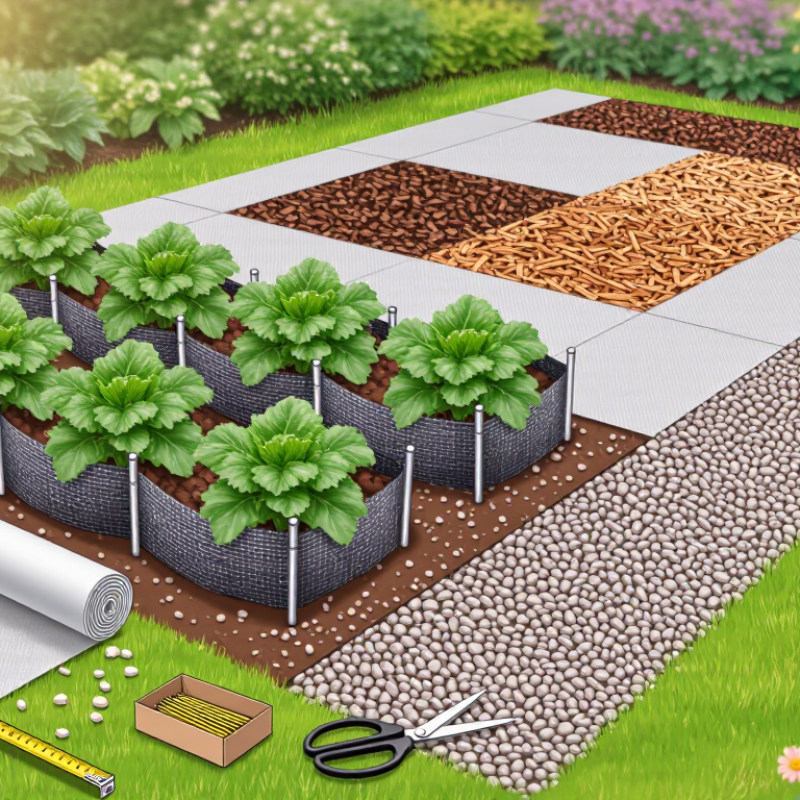
Weed barrier fabric is a permeable layer placed beneath mulch, gravel, or pathways. Its main job is limiting sunlight around weed seeds. It can also reduce soil movement and separate soil from decorative stone. It does not eliminate weeds. Persistent roots may grow through seams, edges, or small cuts. The USDA Natural Resources Conservation Service recognizes geotextiles as useful soil-separation and erosion-control materials, but installation remains critical.
Tip 1: Match the fabric to the site. Woven fabric suits gravel paths because it handles tension better. Spun-bonded fabric often fits planting beds where water movement matters. Check water-permeability data, not only thickness. Tip 2: Inspect the roll for UV resistance and stated service conditions. A product exposed beside a hot driveway may fail sooner than one under mulch. The American Society of Landscape Architects notes that landscape performance depends heavily on drainage, maintenance, and correct installation.
Tip 3: Measure seams carefully. Overlap edges by about 15 to 30 centimeters, then secure them firmly. Avoid stretching fabric across uneven ground. Tip 4: Cut small planting openings, because wide cuts invite light and weed growth. According to the USDA’s 2022 Census of Horticultural Specialties, U.S. horticultural sales reached about 18.3 billion dollars, showing how costly poor landscape decisions can become. Still, fabric is not a permanent solution. I have seen clean beds become weedy when mulch became thin. That detail is easy to miss. Evaluate drainage, sunlight, foot traffic, and future planting before buying.
Fabric weight is a practical starting point when choosing weed barrier fabric. Lightweight fabrics around 3 oz/yd² are commonly used in planted beds, while heavier 5–8 oz/yd² fabrics are better suited to pathways, gravel areas, and slopes where greater durability and puncture resistance are needed. Always check water permeability, UV resistance, fabric construction, and installation requirements before buying.
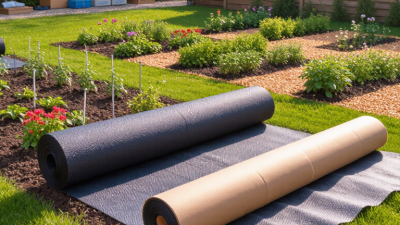
Buying weed barrier fabric starts with the material, not the package label. Woven polypropylene usually provides strong puncture resistance and better water movement. Nonwoven fabrics offer softer coverage and useful filtration, but they can tear under sharp gravel. Natural-fiber fabrics may reduce plastic use, yet their service life varies with moisture, sunlight, and soil biology.
Tip 1: Match fabric structure to the site. FHWA’s Geosynthetic Design and Construction Guidelines, Report FHWA-NHI-07-092, recommends evaluating strength, filtration, drainage, and installation conditions together. Thickness alone can mislead. Check grab tensile strength under ASTM D4632, apparent opening size under ASTM D4751, and permittivity under ASTM D4491. These tests reveal performance more clearly than weight claims.
Tip 2: Inspect the surface beneath the fabric. Remove sharp stones and cut weeds before installation. Leave enough overlap for seams, especially on sloped ground. A practical target is about 15 to 30 centimeters of overlap, depending on wind and soil movement. Secure edges firmly, because exposed gaps invite sunlight and weed growth.
Tip 3: Think beyond the first season. Ultraviolet exposure can weaken uncovered fabric, while foot traffic can create small tears that spread. USDA Natural Resources Conservation Service guidance emphasizes selecting geotextiles according to site conditions and expected service demands. My own caution is simple: I sometimes overvalue thick fabric. A thinner, well-draining product can outperform thick material when drainage and installation are correct. Test a small area after rain before covering the entire bed.
| No. | Buying Tip | Fabric Type or Material | Useful Specification | What to Check | Best Use and Trade-Off |
|---|---|---|---|---|---|
| 1 | Match the fabric type to the installation period | Woven, non-woven, or spunbond landscape fabric | Temporary beds may use lighter fabric; permanent paths generally need heavier construction | Confirm whether the product is intended for seasonal use, multi-year landscaping, or under gravel and pavers | Woven fabric is commonly suited to paths and beds; non-woven fabric can provide good separation and drainage but may tear more easily under concentrated loads |
| 2 | Choose a material with suitable resistance to moisture and decay | Polypropylene or polyethylene | Synthetic polymers are generally preferred for outdoor ground-contact applications | Look for statements covering rot resistance, moisture resistance, and outdoor exposure; avoid untreated natural fibers for long-term soil contact | Polypropylene is widely used because it is lightweight and moisture resistant; polyethylene can also be durable, but performance depends on construction and UV stabilization |
| 3 | Select thickness according to expected wear | Light-duty, medium-duty, or heavy-duty fabric | Typical product weights range from approximately 2 to 6 oz/yd² (about 68 to 203 g/m²) | Compare basis weight or grams per square metre rather than relying only on the words “heavy duty” or “professional grade” | Heavier fabric usually resists punctures better, but it costs more and may be harder to cut and install |
| 4 | Check water permeability before covering the soil | Porous woven or non-woven geotextile fabric | The fabric should allow rainfall and irrigation to pass through rather than creating a sealed layer | Review the water-permeability or flow-rate information; test a sample by pouring water over it before installation | Permeable fabric helps reduce surface runoff and supports irrigation; fine soil can gradually clog small openings |
| 5 | Evaluate resistance to tearing and punctures | Woven slit-film or reinforced woven fabric | Compare tensile strength, tear strength, and puncture resistance when specifications are available | Inspect the weave, pull gently at a cut edge, and consider the risk from stones, roots, tools, and foot traffic | A stronger weave is useful beneath gravel or in high-traffic areas; rough handling can still damage any fabric before it is covered |
| 6 | Confirm ultraviolet exposure protection | UV-stabilized synthetic fabric | UV protection is important wherever the fabric may remain uncovered during storage or installation | Check the stated UV-stabilization information and installation guidance; cover exposed edges promptly | Covering the fabric with mulch, gravel, or another suitable surface generally reduces sunlight damage and may extend service life |
| 7 | Use the correct opening size for weed control and drainage | Woven fabric with small, consistent openings or non-woven fabric | Openings should permit water movement while limiting light and weed emergence | Avoid fabrics with large gaps for fine-mulch areas; verify that the fabric is designed for landscape weed suppression | Smaller openings can improve weed suppression but may drain more slowly when fine sediment accumulates |
| 8 | Consider fabric color and heat exposure | Black or dark-colored landscape fabric | Dark colors reduce light transmission and are commonly used for weed suppression | Use mulch or gravel to cover the material, especially in hot, sunny locations; keep plant stems clear | Dark fabric blocks light effectively, but exposed material can become hot and may degrade faster under prolonged sunlight |
| 9 | Check roll dimensions and installation features | Fabric with marked planting lines or standard roll widths | Common roll widths include approximately 3, 4, and 6 feet; lengths vary by product | Measure the area, allow at least 6 inches of overlap between sections, and select a width that minimizes seams | Correct sizing reduces waste and gaps; seams and exposed edges should be secured with landscape staples |
| 10 | Assess long-term maintenance and environmental suitability | Durable synthetic geotextile with documented specifications | Review expected service conditions, maintenance requirements, and disposal information | Remember that fabric does not stop weeds growing in accumulated mulch or soil on top; inspect periodically and remove new growth | A durable product can reduce replacement frequency, but correct preparation, coverage, drainage, and maintenance are equally important |
Note: Product performance varies by construction, installation quality, soil conditions, climate, and exposure. Always compare the manufacturer’s published technical specifications for the intended application.
Choosing the Right Size, Coverage, and Installation Features
Measure the planting area before shopping. Record its length, width, curves, and narrow corners. Add 10 to 15 percent for overlaps and cutting errors. A roll that seems cheaper may create more seams and wasted material.
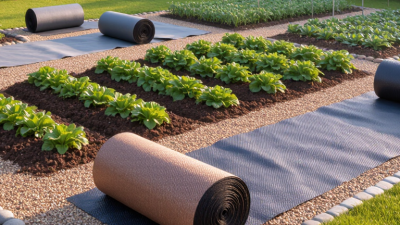
Choose fabric width based on your bed layout. Wider rolls suit long, open beds. Narrow rolls work better around shrubs and raised borders. Use heavier fabric for gravel paths or high-traffic areas. Lightweight fabric may suit annual flower beds, but it can tear during installation. Check the stated coverage, not only the roll length. Thickness and weave affect durability. They are not the same.
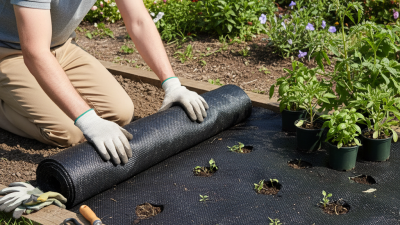
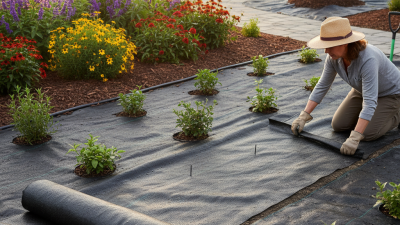
Installation features deserve careful attention. Look for clear cutting guidance and enough flexibility for gentle curves. Secure the fabric with landscape pins, spacing them about every 30 to 60 centimeters. Overlap adjoining pieces by at least 15 centimeters. Cut small X-shaped openings for plants, rather than oversized holes. Large openings invite weeds. Leave extra fabric at edges, then bury or anchor it firmly.
I once cut every opening too wide, and weeds appeared around the stems within weeks. That mistake still influences my measurements.
Inspect the fabric after laying it, especially near stones and sharp roots. A small tear can spread quickly.
10 Tips for Buying Weed Barrier Fabric
Drainage should be checked before weed control. A dense, tightly woven fabric blocks light effectively, but may slow water movement after soil compaction. Ask for laboratory results using ASTM D4491 for water permeability and ASTM D4751 for apparent opening size. Smaller openings can improve weed suppression, yet they may clog faster under fine clay. On sloped beds, observe runoff after heavy rain. A product can look strong and still create puddles.
Safety depends on installation and material disclosure. Choose fabric with documented ultraviolet resistance, stable edges, and low-slip performance for walkways. Avoid covering drains, irrigation emitters, or soil areas needing regular aeration. Check technical sheets for polymer type, additives, and temperature limits. The weak point is often the seam. Overlap and pinning details matter more than attractive packaging.
Environmental performance needs harder questions. The U.S. Environmental Protection Agency reported 35.7 million tons of plastic waste in 2018, with only 8.7% recycled. That figure makes disposal planning relevant, even for a small landscape project. Prefer reusable fabric where practical, and request clear recycling or take-back guidance. “Biodegradable” claims deserve verification; breakdown can vary with sunlight, moisture, and soil conditions. I would not trust a product photo alone. Field conditions are less forgiving. A useful purchase record includes permeability data, UV testing, composition, expected service life, and disposal instructions.
Buying weed barrier fabric works best when the garden’s conditions are understood first. Measure each bed, then add extra material for overlaps and raised edges. Check sunlight, soil moisture, foot traffic, and the types of weeds present. A heavier fabric may suit gravel paths, while lighter fabric can work beneath seasonal mulch. Do not choose by thickness alone. Water flow and tear resistance matter too. Ask for technical specifications, including fabric weight, permeability, and expected outdoor service life.
Installation determines much of the final performance. Remove existing weeds and sharp stones before laying the fabric. Smooth the soil carefully. Small bumps can create gaps where weeds return. Overlap adjoining sheets by at least 15 centimeters, and secure the edges with landscape pins. Cut openings only as large as necessary around plants. I have found that rushed cuts become larger after wind and rain. That mistake is easy to make.
Maintenance still matters. Inspect exposed edges after storms, especially beside paths and fences. Replace damaged sections instead of covering every problem with more mulch. Keep mulch at a moderate depth, and avoid piling it against plant stems. Check drainage after heavy rain. A barrier that blocks water can harm roots, even when it controls weeds well. Some fabrics last for years, but sunlight, tools, and shifting soil shorten their life. Reassess the installation each season. Perfect control is unrealistic. A practical barrier reduces work; it does not remove it.