Why Choose Non Woven Geotextile Fabric for Global Projects?
Why Choose Non Woven Geotextile Fabric for Global Projects?
Infrastructure owners increasingly need materials that manage water, soil, and construction risk together. Non woven geotextile fabric offers practical separation, filtration, drainage, and protection in one flexible layer. Its needle-punched structure allows water to pass while limiting soil migration beneath roads, railways, drainage trenches, and coastal defenses.
The U.S. Federal Highway Administration’s Geosynthetic Design and Construction Guidelines emphasize filtration, drainage, and separation as core geotextile functions. ASTM D4491 and ASTM D4751 also provide recognized methods for evaluating permittivity and apparent opening size. These tests matter on site. A fabric roll must match the soil, flow conditions, loading, and installation method.
Market studies from Grand View Research and MarketsandMarkets report continued growth in the global geotextiles sector, driven by transportation, erosion control, and water infrastructure investment. Estimates differ because definitions and regional data vary. That uncertainty deserves attention.
Robert M. Koerner, a leading geosynthetics researcher, described the field simply: “Geosynthetics are synthetic materials used to solve civil engineering problems.” The principle remains useful, but material selection cannot rely on popularity alone.
A project in wet clay may need high filtration performance. A rocky embankment may demand stronger puncture resistance. Installation damage remains a real concern. Even excellent fabric can fail when overlaps, seams, or drainage outlets are poorly designed.
Non woven geotextile fabric is not a universal cure. It is a tested engineering tool, and its value depends on correct specifications, verified data, and experienced installation.
What Is Non Woven Geotextile Fabric?
Why Choose Non Woven Geotextile Fabric for Global Projects?
What Is Non Woven Geotextile Fabric?
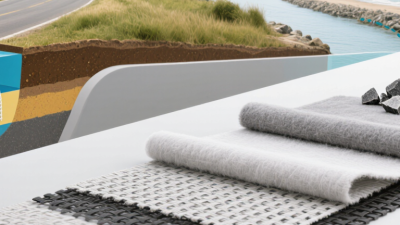
Non woven geotextile fabric is a porous sheet made from randomly arranged synthetic fibers. The fibers are bonded through heat, chemicals, or mechanical needling. Unlike woven fabric, it usually has a soft, felt-like texture and strong filtration capacity.
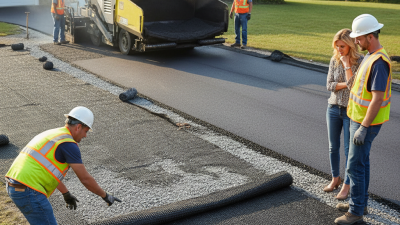
Its main functions include separation, filtration, drainage, and soil protection. In a road project, it can separate weak soil from crushed aggregate. Water can move through the fabric while fine soil particles remain contained. This helps reduce mixing, clogging, and uneven settlement. In drainage systems, the fabric supports cleaner water flow around pipes and gravel layers.
The material is not a magic blanket. Its performance depends on soil conditions, installation quality, strength, and long-term exposure. A fabric that feels strong may still be unsuitable for heavy loads or sharp stones. Engineers should review test data, including tensile strength, puncture resistance, apparent opening size, and permeability. Field inspection also matters. Tears, folded edges, and poor overlaps can weaken an otherwise suitable design. These details are sometimes underestimated.
Tips: Match the fabric to the soil and project purpose. Remove sharp debris before placement. Keep overlaps secure and avoid unnecessary wrinkles. Check drainage performance after installation, not only during delivery. A rushed specification can create expensive problems later.
How Is Non Woven Geotextile Fabric Manufactured?
Why Choose Non Woven Geotextile Fabric for Global Projects?
Non-woven geotextile fabric begins with carefully selected polymer resin, commonly polypropylene or polyester. The resin is melted and pushed through tiny openings to form continuous filaments. Some manufacturers use short fibers instead. These fibers are spread into a loose, even web. The web then gains strength through needle punching, thermal bonding, or both methods. Needle punching uses thousands of barbed needles to interlock fibers. Thermal bonding applies controlled heat to strengthen contact points. The final material may be trimmed, rolled, and packed for transport. Small differences in temperature can affect thickness and tensile performance.
Quality control should continue throughout production. Technicians measure mass per unit area, puncture resistance, tensile strength, and apparent opening size. They also inspect roll edges and fiber distribution. Field experience shows that storage conditions matter. Moisture, sunlight, and rough handling can damage exposed rolls. No factory process is flawless. Regular testing reduces surprises, but installation decisions still require judgment.
Tips: Keep rolls covered and raised above wet ground. Select the fabric according to soil, drainage, filtration, and separation requirements. Ask for current test data, not only a product description. Check seams and overlaps during installation. A slightly heavier fabric is not always better; compatibility with the soil matters more. Document site conditions, because real ground rarely matches laboratory assumptions.
Why Is It Suitable for Different Soil and Climate Conditions?
Nonwoven geotextile fabric suits global projects because soil and weather rarely stay predictable. Its needle-punched structure creates interconnected pores. These pores separate aggregate from weak soil while allowing controlled water movement. This matters in clay, silt, sand, and mixed fill. The FAO’s Status of the World’s Soil Resources report estimates that about one-third of global soils are degraded. Variable ground conditions are therefore normal, not exceptional.
Clay swells. Sand migrates. In wet tropical regions, high rainfall can quickly raise pore-water pressure. In cold regions, freezing and thawing can disturb road layers. The IPCC’s Sixth Assessment Report confirms that heavy precipitation events are intensifying in many regions. Nonwoven fabric can support filtration and drainage, but its performance depends on pore size, permeability, loading, and installation quality. One design assumption may fail elsewhere. That deserves honest review.
Tips:
Match apparent opening size to the surrounding soil, not simply the lowest product cost. Check permittivity, grab tensile strength, puncture resistance, and survivability during placement. For muddy sites, inspect overlaps and prevent aggregate contamination. On exposed slopes, review ultraviolet exposure and surface protection. Field testing remains valuable, especially where soil layers change within a few metres. A fabric that works beside a dry highway may perform differently near a saturated embankment.
How Should Non Woven Geotextile Fabric Be Selected and Installed?
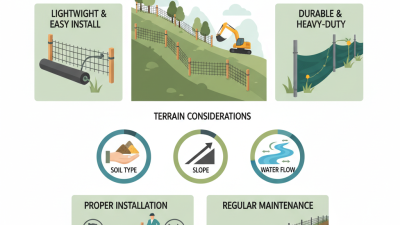
Non woven geotextile fabric supports roads, drainage systems, railways, and coastal works worldwide. Its fibers create a flexible barrier between soil layers. Selection should begin with site data, not product availability. Check soil type, water flow, expected loads, installation depth, and exposure time. A weak clay subgrade may require higher tensile strength and puncture resistance. For drainage, prioritize permeability and suitable pore size. A fabric that filters poorly can retain water and weaken the structure. It sounds obvious. Yet teams sometimes select by weight alone.
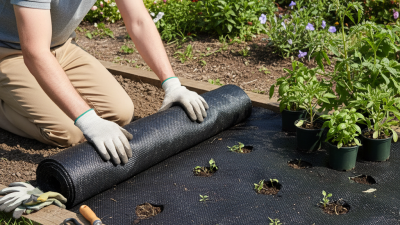
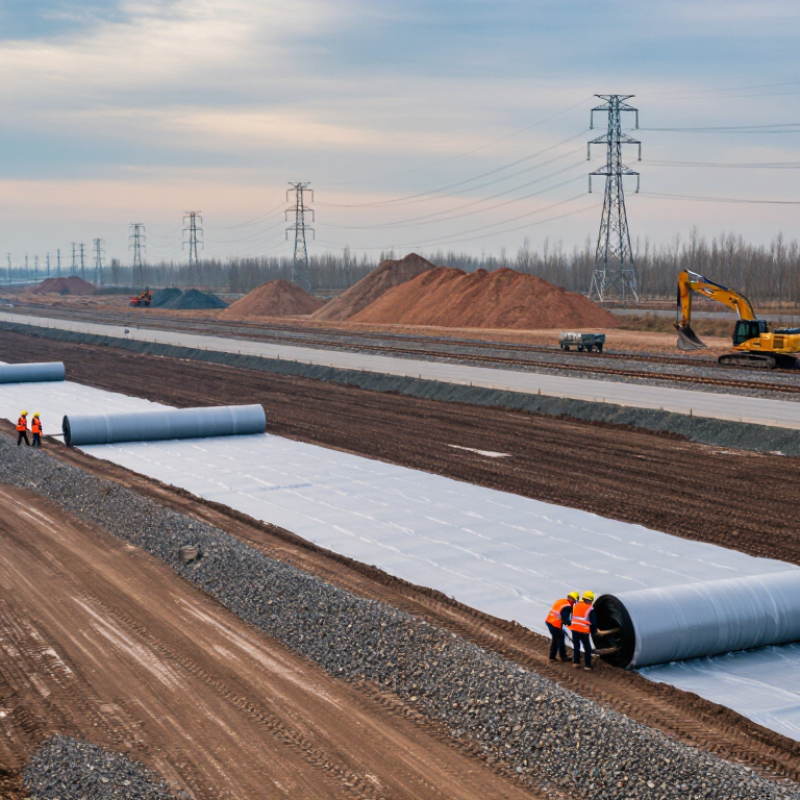
Installation begins with a firm, clean subgrade. Remove sharp stones, roots, and standing water. Unroll the fabric without stretching it. Keep overlaps consistent, often between 300 and 600 millimeters, according to design conditions. Sewn seams may improve stability on slopes or under heavy aggregate. Secure edges before placing fill. Place aggregate carefully, rather than dropping it from excessive height. Inspect tears immediately and patch them with matching material. Field conditions can surprise careful teams. I have seen small wrinkles create larger problems after compaction.
Tips: Confirm specifications with a qualified geotechnical engineer. Test permeability and strength when project risks are high. Protect exposed fabric from prolonged sunlight. Record overlaps, repairs, and delivery batches. Do not install during severe rain or strong winds. A simple inspection checklist helps, although it is easy to overlook during busy work. Ensure local drainage and construction standards are reviewed before installation.
Why Choose Nonwoven Geotextile Fabric for Global Projects?
Nonwoven geotextiles are selected according to the required function, soil conditions, hydraulic performance, and installation environment. The chart shows typical basis-weight ranges commonly used for major civil-engineering applications; final values must follow the project specification and local standards.
During selection, confirm apparent opening size for filtration, permeability for drainage, tensile and puncture strength for separation, and durability for site exposure. During installation, prepare a smooth subgrade, remove sharp objects, place the fabric without folds, provide adequate overlaps, and cover it promptly to prevent displacement or damage.