What Are the Best Erosion Control Products from China?
Choosing the best erosion control products from China starts with the site, not the catalogue. A steep cut beside a drainage ditch needs different protection from a flat, newly seeded field. Soil type, rainfall, slope length, and installation quality all matter. Small details matter.
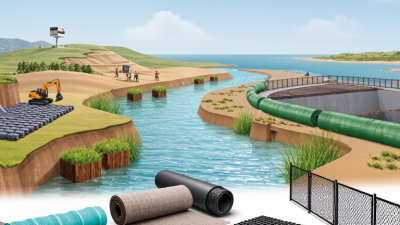
China’s suppliers offer a wide range of options, including coir and straw blankets, erosion-control mats, geotextiles, silt fences, and hydroseeding materials. But a product name alone tells little. Buyers should examine fiber type, mesh strength, biodegradability, roll dimensions, and test documentation. Ask for samples. Check the stitching and edge strength, not just the product photo. One weakness in this comparison is that published specifications do not always show how materials perform after months of rain and sunlight.
Soil-erosion researcher R.P.C. Morgan’s work supports a practical principle: match protection to the slope, soil, and runoff. This is a paraphrase, not a direct quotation. The principle is useful when comparing erosion control products because no single mat or blanket fits every site. A biodegradable straw blanket may suit a seeded slope, while a stronger permanent system may be needed where water concentrates. Installation matters just as much. A well-made roll can still fail if its edges are loose or water flows underneath.
The sections ahead compare common product types, typical applications, and supplier checks. They also consider trade-offs, because the cheapest option can become costly after a washout. There is no universal winner. A careful shortlist begins with the ground itself.
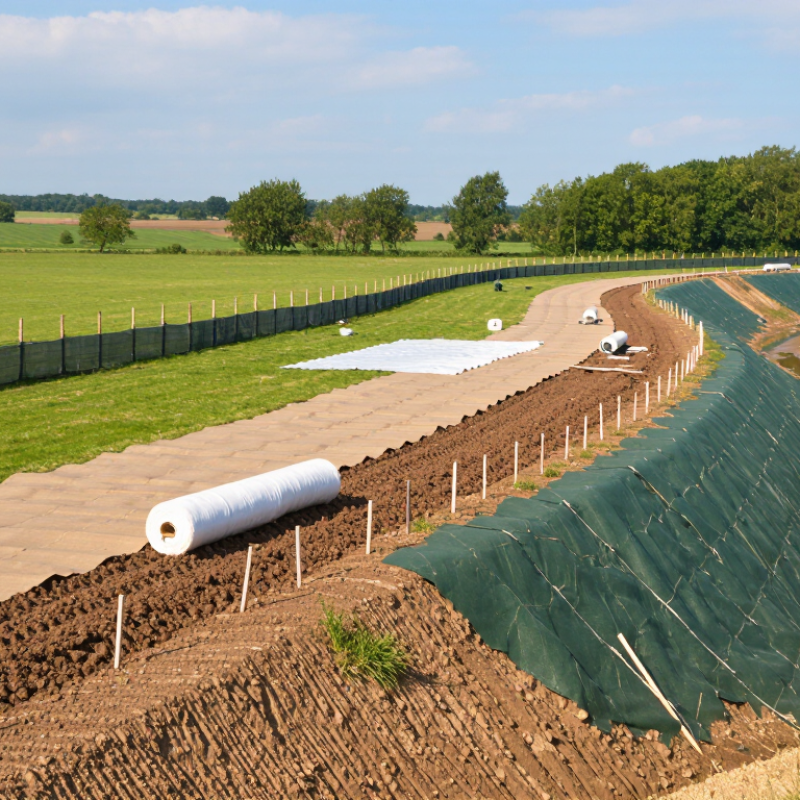
Erosion Control Products: How Blankets, Mats, Geocells, and Silt Fences Work
Selecting erosion control products from China starts with the site, not the catalog. A biodegradable erosion blanket can protect freshly seeded soil from rain splash and slow surface runoff. Its fibers hold moisture and help keep seed in place while vegetation develops. On a windy slope, however, loose edges can lift and expose the soil. Secure the blanket closely, especially along seams and the upper edge. Small details matter.
Erosion control mats are usually tougher and may suit channels or slopes with stronger water flow. Check their material, opening size, and anchoring guidance against expected conditions. Geocells form a three-dimensional grid that confines soil or aggregate, reducing movement on slopes and in drainage areas. They need a stable base and proper infill. Not a shortcut. A product’s advertised strength cannot compensate for poor installation or an unsuitable design.
Silt fences are temporary barriers that slow sediment-laden runoff, allowing soil particles to settle before water passes through. They work best when installed along contour lines, with the fabric buried at the base and posts firmly supported. They are not designed to stop every flow, and concentrated water can wash around or through them. When comparing suppliers, request clear test data, installation instructions, and material specifications. A specification sheet still cannot show every site condition, so sample checks and project-specific review are worth the extra effort.
Biodegradable vs. Synthetic Products: Lifespan, Strength, and Site Suitability
Choosing erosion control products from China starts with the site, not the catalog. Consider slope angle, soil texture, rainfall, and how quickly plants can establish. Biodegradable coir, jute, or straw blankets protect exposed soil while roots take hold. They gradually break down, so their useful life depends on fiber quality, moisture, and installation. A short-lived blanket may suit a revegetation project. It may fail on a steep, persistently wet bank.
Synthetic netting and geotextiles generally last longer and can provide more consistent reinforcement. They may suit drainage channels, road embankments, or sites where vegetation will take time to develop. But durable does not always mean appropriate. If mesh openings are too large, soil can wash through; if the material remains exposed, it may hinder maintenance or plant growth. Check tensile strength, opening size, UV resistance, and anchoring details against the project specification.
On a trial section, inspect the edges after heavy rain. Small gaps often become the weak points. When comparing suppliers, request product dimensions, fiber or polymer details, and relevant test data—not just attractive installation photos. I would also question any lifespan estimate that lacks site conditions. Real slopes are uneven, and installation quality can change the result.
ASTM D6459 and D6460: Testing Products on Slopes and in Channels
When comparing erosion-control products from China, ASTM test methods offer more useful evidence than attractive photographs. ASTM D6459 evaluates products on slopes under simulated rainfall and runoff. A typical setup places the product over prepared soil, then applies controlled rain while technicians measure soil loss and runoff. Small details matter. Soil type, slope angle, rainfall intensity, installation method, and test duration can all affect results.
ASTM D6460 addresses channel applications, where flowing water creates concentrated stress. The product is installed in a test flume, and water is routed across its surface under specified conditions. Observers assess erosion, movement, and soil retention after exposure. This is not the same challenge as rainfall on a hillside. A material that performs well on a slope may still lift, unravel, or lose soil in a drainage channel.
Ask for the complete laboratory report, including test configuration, product dimensions, anchoring, and observed failure points. Compare products only when test conditions are similar. Check whether results reflect the intended soil, gradient, flow, and installation. Real sites are messier. A field trial can reveal seam gaps, poor contact, or runoff bypass that a controlled test misses. Standards support informed selection; they do not guarantee performance at every site. Some reports leave questions unanswered, and that deserves attention, not guesswork.
Choosing Products by Slope, Soil, Runoff, and Measured Erosion Risk
What Are the Best Erosion Control Products from China?
Choosing Products by Slope, Soil, Runoff, and Measured Erosion Risk
The right erosion-control product depends on what water does on site. On a short, gentle slope with stable soil, biodegradable erosion-control blankets can protect seed while vegetation establishes. Steeper ground may need turf-reinforcement mats or anchored coir and straw rolls. Check soil texture, slope length, and expected flow before choosing. A blanket that looks secure on delivery can still lift if its edges and overlaps are poorly anchored.
Use measurements, not appearance alone. USDA NRCS’s RUSLE2 method estimates soil loss using rainfall erosivity, soil erodibility, slope, cover, and support practices. Its 2017 National Resources Inventory reported that annual erosion by water and wind on non-federal rural lands declined from about 3.07 billion tons in 1982 to 1.69 billion tons in 2017. These are nationwide estimates, not a site-level prediction. Rain changes everything. After storms, inspect rills, sediment deposits, and runoff outlets; record changes and adjust protection where flow concentrates. On a steep, fine-textured slope, a temporary blanket may need a stabilized channel or sediment barrier below it. Product performance also depends on installation and maintenance, details that are easy to underestimate.
Choosing Erosion-Control Products by Slope
Representative slope grades for planning. The degree values are calculated from the percentage grades shown.
For gentle slopes, consider erosion-control blankets suited to the soil and expected runoff. Steeper slopes may need securely anchored blankets or turf-reinforcement systems; use riprap where concentrated flow requires channel protection. These slope values are not erosion-risk measurements or product performance ratings. Select products using site-specific soil, runoff, rainfall, and measured erosion data, and follow project specifications.
China-Made Product Checks: Specifications, Test Reports, and Export Compliance
When comparing erosion control products made in China, start with the specification sheet, not the sales description. Check mass per square metre, tensile strength, opening size, roll dimensions, and stated service life. Small details matter. Match each value to the project: a steep, exposed slope has different demands from a lightly graded site. Do not compare products by weight alone. A heavier mat may still have unsuitable openings or weak seams.
Ask for test reports that identify the exact product construction and test methods. Look for the laboratory, report date, sample description, conditioning details, and measured results. Then compare the sample description with the goods being quoted. Paper can mislead. A report may cover a different fibre blend, weave, or coating. Request the applicable tolerances and clarify which results are independently tested. This step can feel tedious, but it prevents a specification mismatch from reaching the site.
For export checks, confirm that the invoice, packing list, declared origin, product description, and shipment quantities agree. Verify tariff classification and destination-market requirements with a qualified customs professional; rules can vary by product and country. Check required labels and packaging before production ends. It is tempting to rely on a supplier’s assurance, but written records are more useful. A pre-shipment inspection, clear photographs, and a retained reference sample can help resolve disputes, though they cannot guarantee field performance.
Conclusion
Choosing the right erosion control products from China starts with understanding how each option works. Blankets and mats protect exposed soil from rainfall and runoff, geocells help stabilize slopes and channels, and silt fences reduce sediment movement at site boundaries. Biodegradable materials can suit projects where temporary protection is needed and vegetation will establish over time, while synthetic products may provide longer service or greater strength. Selection should reflect slope steepness, soil type, runoff conditions, expected service life, and measured erosion risk rather than price alone.
For performance evidence, ASTM D6459 evaluates erosion-control products on slopes, while ASTM D6460 addresses channel applications. Buyers should compare product specifications with test reports and confirm that the materials meet relevant export and project requirements. Construction sites that disturb one acre (0.4 ha) or more may also need to consider applicable stormwater permit requirements before work begins. Matching verified product performance to site conditions helps support effective, practical erosion management.