
Skip to content

What Is an LED High Bay Light?

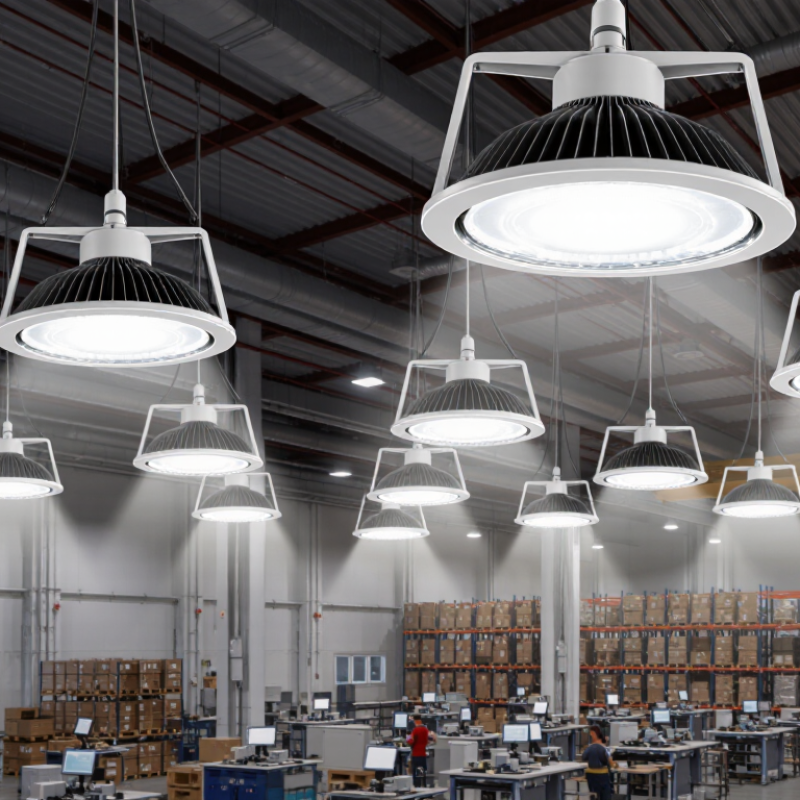
A Led High Bay Light is a purpose-built fixture for spaces with high ceilings, such as warehouses, factories, sports halls, and aircraft hangars. Mounted above tall shelving or production lines, it must deliver useful light across a broad floor area without leaving dark patches or causing harsh glare. The name describes its typical application, not one fixed design: optics, lumen output, mounting height, and controls all affect performance.

The International Energy Agency’s lighting analysis estimates that lighting uses about 15% of global electricity and contributes roughly 5% of global greenhouse gas emissions. These figures explain why efficient lighting matters, but they do not prove that every LED replacement saves energy. A poorly matched beam can waste light on aisles or ceilings. The U.S. Department of Energy’s lighting guidance likewise emphasizes selecting equipment for the space and task. Measure carefully.

Lighting researcher Naomi J. Miller of Pacific Northwest National Laboratory has emphasized visual quality in lighting design. A practical paraphrase of that principle is: “Efficiency matters, but people still need clear, comfortable light.” That distinction is easy to overlook. Before choosing a high-bay fixture, consider ceiling height, aisle layout, work surfaces, color quality, and dimming needs. A bright warehouse can still feel uneven. The right fixture is the one that puts dependable light where people actually work.
What Is an LED High Bay Light?

What Defines an LED High Bay? A Luminaire for Ceilings Around 20 ft or Higher

What Is an LED High Bay Light?

An LED high bay light is designed for open spaces with ceilings around 20 feet or higher. Mounting height is the main clue, not a rigid cutoff. The height matters. At that distance, an ordinary fixture may leave dim areas on the floor. High bays are built to deliver useful light across larger spaces, often with optics suited to elevated installation.

Picture a warehouse with tall racks and a concrete floor. A high bay’s beam pattern needs to reach aisle surfaces and work areas without creating harsh bright spots. Narrow beams can leave neighboring areas dark; overly wide beams may spill light onto rack tops. Spacing, fixture output, and beam angle all affect the result. It is a practical balance.

Ceiling height alone cannot determine whether a high bay is the right choice. The layout, task, mounting position, and required light levels matter too. For example, a loading area may need different coverage from a storage aisle. A lighting plan or photometric layout can help reveal gaps before installation. Even then, real spaces are imperfect: racks move, dust gathers, and glare can be more noticeable than a plan suggests.

How LED High Bays Work: LEDs, Drivers, Heat Sinks, Optics, and Controls

An LED high bay is a ceiling-mounted fixture designed to illuminate large spaces from heights often above six metres. Inside, LED chips convert electrical energy into light, while a driver regulates the current they receive. This helps maintain steady output as the electrical supply varies. A driver also affects dimming compatibility, so matching it to the control system matters.

Heat needs somewhere to go. A metal heat sink conducts warmth away from the LEDs and releases it into the surrounding air. Keeping the fixture clear of dust can help airflow, though cleaning routines are easy to overlook in busy warehouses. Optics—lenses or reflectors—shape the light. A narrow beam can reach a high rack aisle; a wider one may suit an open work area. Neither is automatically better.

Controls add another layer. Occupancy sensors can reduce output when an area is empty, while daylight sensors can respond to light entering through roof windows. Sensor placement matters: a poorly aimed unit may miss activity at the edge of an aisle. Dimming can also change the perceived brightness, so checking it from the floor is more useful than judging a fixture on a workbench. Small details matter.

What Is an LED High Bay Light? - How LED High Bays Work: LEDs, Drivers, Heat Sinks, Optics, and Controls

Component What It Does How It Works Typical Details Why It Matters
LEDs Generate the light. Electrical current passes through semiconductor LED junctions, producing light. Multiple LEDs are arranged on a circuit board to provide the required output. High-bay fixtures commonly use arrays of LEDs. Light output, color temperature, and color rendering depend on the LED package and fixture design. LED efficiency and operating temperature influence energy use, light output, and service life.
Driver Supplies and regulates power for the LEDs. The driver converts incoming AC electricity into controlled electrical power suitable for the LED array. Many drivers also support dimming or control inputs. Check the fixture’s rated input voltage, dimming method, and compatibility with any control system. A compatible, properly rated driver helps provide stable operation and enables the intended dimming features.
Heat sink Moves heat away from the LEDs and other components. Heat travels from the LED board into a thermally conductive housing or finned heat sink, then dissipates into the surrounding air. Common designs use metal housings or fins. Actual thermal performance depends on fixture construction, airflow, ambient temperature, and installation conditions. Managing heat helps limit temperature-related light-output decline and component stress.
Optics Shape and direct the light beam. Lenses, reflectors, or diffusers distribute light across a target area and influence beam spread, glare, and uniformity. Optic choices vary by fixture. Narrower distributions can concentrate light; wider distributions spread it over a larger area. Choosing optics to suit ceiling height, aisle layout, and task areas can improve usable illumination and reduce unwanted light.
Controls Adjust light output in response to user settings or conditions. Dimmers, occupancy sensors, and daylight sensors can reduce or switch lighting when full output is not needed, provided the fixture and driver support them. Control options may include manual dimming, occupancy-based control, daylight response, or scheduled operation. Controls can reduce energy use when spaces are vacant or daylight is sufficient; correct setup and compatibility are essential.
Housing and mounting Protect the fixture and support installation. The enclosure holds the optical, electrical, and thermal components. Hooks, pendants, or other approved hardware secure the fixture overhead. High bays are used in spaces such as warehouses, gyms, and manufacturing areas with high ceilings. Environmental ratings differ by fixture. Select mounting hardware and environmental protection appropriate to the ceiling structure and site conditions.

Note: Fixture specifications vary. Confirm photometric data, electrical ratings, environmental ratings, and control compatibility for the specific installation.

Where High Bays Fit: Warehouses, Factories, and Other Large Indoor Spaces

An LED high bay is a ceiling-mounted light designed to illuminate large indoor spaces from considerable heights. It is common in warehouses, factories, gymnasiums, and distribution centers, where low-mounted fixtures can obstruct equipment or create uneven light. High bays use focused or wide beam patterns to reach floors, shelves, and workstations.

Ceiling height matters. So does spacing: poorly placed fixtures can leave dark patches between storage aisles.

The International Energy Agency’s 2023 Buildings report estimates that buildings account for about 30% of global final energy consumption. That figure covers all building energy, not high-bay lighting alone, but it shows why efficient equipment matters. The U.S. Department of Energy’s Energy Saver guidance says LEDs use at least 75% less energy than incandescent lighting and can last up to 25 times longer. Those comparisons are not a direct measure against every older warehouse fixture.

Dust does too.

In real facilities, dirty lenses, high shelves, and changing layouts can reduce useful light. A sensible design checks mounting height, aisle direction, required task visibility, and maintenance access—not just the lumen rating.

Key Selection Metrics: Lumens, Lux, CCT, CRI, Beam Angle, and IP Rating

What Is an LED High Bay Light?

An LED high bay light is designed for rooms with high ceilings, such as warehouses, workshops, and gyms. Choosing one involves more than checking its wattage. Lumens describe the total light emitted, while lux measures how much reaches a surface. A fitting with many lumens can still leave a workbench dim if it is mounted high or spaced poorly. Measure at the floor or task surface.

CCT describes light appearance in kelvins. Around 4000K looks neutral; 5000K appears cooler and can make labels easier to read, though preferences vary. CRI indicates how accurately colors appear under the light. For sorting colored materials or inspecting finishes, a higher CRI can help. Small details matter. Beam angle shapes the spread: a narrow beam can create bright pools beneath fixtures, while a wider beam may suit open areas. At a six-meter ceiling, check spacing and aisle layout before choosing.

IP rating indicates resistance to dust and moisture, not overall durability. A dusty workshop may need a higher dust-protection rating than a clean storage room; damp or washdown areas require careful review of the full rating. Real rooms rarely match a catalog diagram. I would compare a lighting layout with measurements after installation, because reflections, shelving, and dark floors can change the result. A specification sheet is useful, but it cannot show every shadow.

LED High Bay Light Selection: Target Illuminance by Application

The chart shows illustrative maintained illuminance planning ranges; actual requirements depend on the task and applicable local standards. Lux measures light on a surface, while lumens measure a fixture’s total light output. Estimate fixture lumens from the room area, mounting height, layout, and light-loss factors—not from lux alone. Also compare CCT (often 4000–5000 K for practical work lighting), CRI (80+ is a common general-work target), beam angle (matched to mounting height and spacing), and IP rating (matched to dust and moisture exposure; IP65 is a common choice for harsher environments).

Efficiency Benchmark: DOE Says LEDs Use at Least 75% Less Energy Than Incandescents

What Is an LED High Bay Light?

Efficiency Benchmark: DOE Says LEDs Use at Least 75% Less Energy Than Incandescents

An LED high bay light is designed to illuminate spaces with high ceilings, such as warehouses, workshops, and gymnasiums. It directs bright, useful light across floors and work areas from a considerable height. The energy comparison matters. The U.S. Department of Energy reports that LEDs use at least 75% less energy than incandescent lighting. That benchmark helps explain why LED technology can reduce lighting demand.

But it needs context. The 75% figure compares LEDs with incandescent lamps, not necessarily with the high-intensity discharge fixtures already installed in a warehouse. Actual savings depend on the old equipment, operating hours, fixture output, and layout. Check lumens and watts, not wattage alone. A lower-wattage fixture may still provide suitable brightness, but poor placement can leave dark aisles.

Look at the details. A facility running lights through long shifts may benefit more than one using them occasionally. Dimming controls and occupancy sensors can reduce energy use further when conditions allow. Still, brighter is not always better; glare on a polished floor can make work harder. The percentage is a useful benchmark, not a promise for every building. Measure the existing lighting and compare real operating needs before choosing replacements.