What Is Niobium Plate Used For?
Niobium Plate is valued for its unusual combination of corrosion resistance, heat tolerance, and superconducting performance. Engineers use it when ordinary steel or aluminum may degrade in demanding environments. Its surface can remain stable against many acids, alkalis, and molten metals, although performance depends on temperature, concentration, and contamination.
In chemical processing equipment, niobium plate may protect reactors, heat exchangers, and vessels exposed to aggressive chemicals. Manufacturers also use it in aerospace components, vacuum systems, and specialized research equipment. At extremely low temperatures, niobium becomes superconducting, supporting magnets in medical imaging systems and particle research facilities. The material is also considered biocompatible, so selected niobium products appear in medical and dental applications.
The details matter.
Plate thickness, purity, welding method, and surface condition can change its reliability. A poorly prepared joint may fail even when the base material performs well. This point is easy to overlook. Material certificates, inspection records, and applicable ASTM or customer specifications should guide purchasing decisions. Practical experience also shows that niobium is not automatically the best option for every project. Its cost, forming behavior, and limited supply may require careful comparison with titanium, tantalum, or high-alloy steel. This guide examines what Niobium Plate is used for, how engineers select suitable grades, and which limitations deserve closer attention before fabrication. Real performance depends on design, processing, and service conditions—not the material name alone.
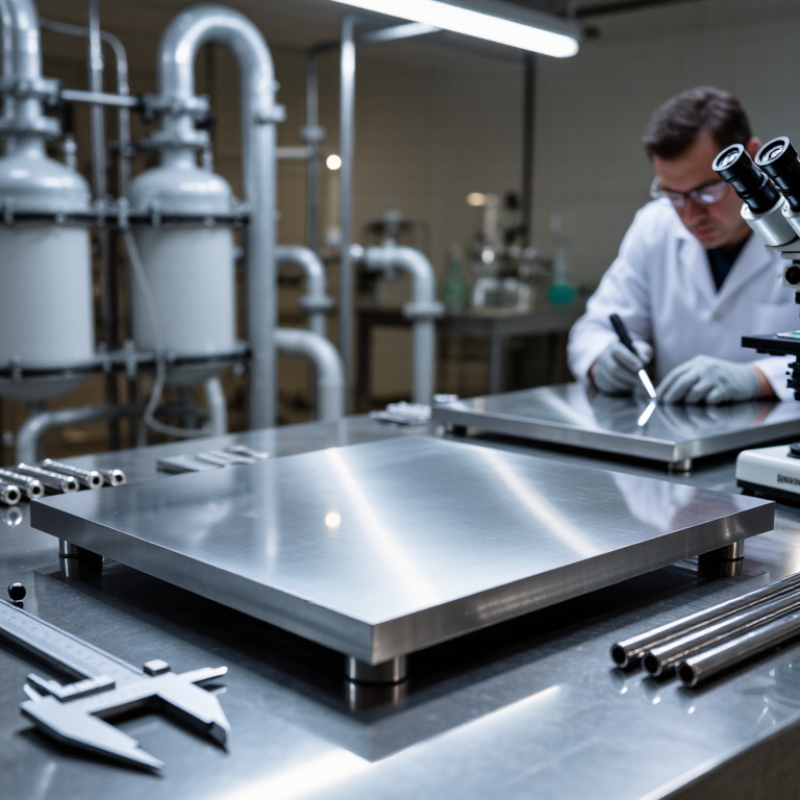
What Is Niobium Plate and What Properties Does It Have?
Niobium plate is a flat, workable form of niobium, a ductile refractory metal. It has a melting point near 2,477°C and remains stable in demanding environments. Its density is about 8.57 g/cm³, making it heavier than titanium but lighter than many common steel grades. A thin oxide layer protects the surface from many acids and corrosive chemicals. This protection is useful, but it is not universal.
The material also performs well at very low temperatures. Niobium becomes superconducting below roughly 9.2 K, which makes carefully prepared plate valuable for superconducting equipment and scientific instruments. Its low-temperature behavior is impressive. It can also be fabricated by rolling, cutting, welding, and machining when technicians control heat input and contamination. In chemical processing, plate may serve as liners, reaction equipment components, or corrosion-resistant supports. Aerospace and vacuum applications may use it when low weight, heat resistance, and chemical stability matter together.
High-temperature service needs caution. Niobium oxidizes in air at elevated temperatures, so protective atmospheres or coatings may be necessary. This point is often simplified in product descriptions. Surface condition, purity, grain structure, and thickness can change performance significantly. Before selecting a plate, engineers usually review chemical compatibility, operating temperature, weld requirements, and inspection records. Ultrasonic testing may reveal internal flaws, although it cannot replace suitable design judgment. The material is capable, not magical.
How Is Niobium Plate Manufactured and Processed?
Niobium plate is manufactured through a controlled sequence of melting, forging, rolling, heat treatment, and inspection. The process usually begins with a niobium ingot produced under vacuum or another protected atmosphere. This reduces contamination from oxygen, nitrogen, and carbon. The ingot is then heated carefully before hot forging or rolling. Temperature control matters because niobium can become brittle if processed incorrectly.
After hot working, the plate may undergo cold rolling to achieve tighter thickness and improved surface quality. Intermediate annealing can restore ductility and reduce internal stress. Manufacturers often use vacuum annealing because niobium reacts readily with air at elevated temperatures. Edges are trimmed, and surfaces may be machined, ground, or polished. Final inspections check thickness, flatness, grain structure, surface defects, and chemical composition. Small variations can still appear, especially in thick sections. That is why traceable testing remains essential.
Tips: Keep niobium plate clean and dry during handling. Use compatible tools to prevent iron contamination. Store it with protective wrapping, but inspect the surface before fabrication. Laser cutting, bending, and welding require suitable parameters and skilled operators. Excessive heat can change the material’s structure or create discoloration. Practical experience helps, but written process records are more reliable than memory. Even a clean-looking plate deserves inspection before use.
How Is Niobium Plate Used in Superconducting Technology?
What Is Niobium Plate Used For?
How Is Niobium Plate Used in Superconducting Technology?
Niobium plate is widely used to manufacture superconducting radio-frequency cavities. These cavities accelerate charged particles inside research accelerators and medical equipment. Niobium becomes superconducting near 9.2 kelvin, when cooled with liquid helium or advanced cryogenic systems. At this temperature, electrical resistance becomes extremely low.
Manufacturers shape thin niobium sheets into curved cavity sections. Electron-beam welding joins these sections inside controlled environments. The welds must remain smooth and clean. Tiny particles, scratches, or trapped gases can increase energy loss. That detail matters more than it first appears. A cavity may look perfect, yet perform poorly during testing.
High-purity niobium is preferred because impurities can reduce superconducting performance. Engineers inspect grain structure, thickness, surface roughness, and weld quality. Chemical polishing removes damaged surface layers after forming. Ultrasonic cleaning then helps eliminate microscopic contamination. Cooling tests measure field strength, quality factor, and power dissipation. Results can vary between production batches, so careful documentation remains essential.
Niobium plate also supports superconducting magnets and specialized microwave components. Its strength, corrosion resistance, and stable behavior at cryogenic temperatures make it practical for demanding systems. However, niobium is not automatically reliable after fabrication. Poor handling can erase the benefits of excellent raw material. More research is still needed to lower cooling costs and improve cavity efficiency.
What Roles Does Niobium Plate Play in Aerospace and Chemical Industries?
Niobium plate supports demanding work in aerospace and chemical processing. Its high melting point, low neutron absorption, and resistance to many corrosive environments make it valuable. The USGS Mineral Commodity Summaries 2025 estimated global niobium mine production at about 99,000 metric tons in 2024. Supply remains highly concentrated. That affects long-term material planning.
In aerospace, engineers use niobium alloys for high-temperature parts, rocket hardware, and specialized heat shields. Niobium plate can serve as a thin structural layer or fabrication material in controlled environments. However, unprotected niobium oxidizes rapidly at high temperatures in air. Protective coatings or vacuum conditions are often necessary. That limitation is easy to overlook. The European Commission’s 2023 critical raw materials assessment classified niobium as strategically important for advanced industries, including aerospace.
Chemical plants use niobium plate in corrosion-resistant linings, heat-transfer equipment, and components exposed to aggressive acids. It performs especially well in selected sulfuric and hydrochloric acid conditions, but performance depends on concentration, temperature, weld quality, and impurities. Field engineers should verify test data before specifying it. I would not call niobium a plug-and-play metal. Its cost, forming difficulty, and limited supply can outweigh its benefits in ordinary equipment. Still, when corrosion damage threatens shutdowns, its service life may justify the careful design.
How Is Niobium Plate Used in Medical and Scientific Equipment?
Niobium plate is used in medical and scientific equipment mainly because it remains stable in demanding environments. It resists corrosion, tolerates high temperatures, and performs well near cryogenic systems. The USGS Mineral Commodity Summaries 2024 reported that Brazil supplied roughly nine-tenths of global niobium mine output in 2023. That concentration makes material traceability important for laboratories and hospitals.
In medical equipment, niobium plate is not usually the main patient-contact material. A common misunderstanding. Superconducting MRI magnets typically use niobium-titanium wire, rather than solid niobium plate. However, niobium-based components can support cryogenic assemblies, vacuum housings, and specialized research instruments linked to medical imaging. In scientific equipment, niobium sheet is formed into superconducting radio-frequency cavities for particle accelerators. These cavities operate at very low temperatures and help accelerate charged particles efficiently. The European XFEL technical reports describe thousands of niobium cavities operating in cryogenic accelerator systems. Plate thickness, grain structure, surface cleanliness, and weld quality directly affect performance.
Tips: Ask for mill certificates, impurity limits, ultrasonic inspection, and vacuum-compatible finishing. Confirm whether the design requires pure niobium or a niobium alloy. Do not assume thicker plate means better reliability. Geometry and surface treatment often matter more. I would also verify thermal contraction before machining, because small dimensional errors can become serious at cryogenic temperatures.
What Is Niobium Plate Used For?
How Is Niobium Plate Used in Medical and Scientific Equipment?
Niobium is valued for its high melting point, corrosion resistance, and superconducting behavior below approximately 9.25 K. Niobium plate and sheet are used in superconducting radio-frequency cavities for particle accelerators, vacuum and cryogenic research equipment, and specialized components associated with MRI and other superconducting magnet systems. The chart compares key temperature values that explain why niobium is suitable for demanding scientific and medical environments.