How to Choose a Surface Mounted Light?
Choosing a Surface Mounted Light is not just a style decision. It affects how clearly you see, how comfortable a room feels, and whether the fixture suits the ceiling. Lighting designer Randall Whitehead is often associated with the phrase, “Lighting is the jewelry of a room.” The comparison is useful, but appearance alone cannot guide a sound purchase. A polished fixture can still cast harsh shadows or leave a kitchen counter dim.
Start with the room and its tasks. Note the ceiling height, fixture location, and surfaces that need light. A narrow hallway may need even, low-glare illumination; a workbench needs brighter, more focused coverage. Compare lumen output, color temperature, beam spread, and color-rendering information on product specifications. Check whether the model supports dimming and whether the dimmer is compatible. Small details matter. A bright source aimed at a glossy tabletop can create an annoying reflection.
Then consider construction, maintenance, and installation. Measure the mounting area, inspect the fixture’s dimensions, and confirm its stated suitability for dry, damp, or wet locations. Do not assume every surface-mounted model fits every ceiling or electrical setup. Follow the manufacturer’s instructions, and consult a qualified electrician when wiring or site conditions are uncertain. One limitation remains: product labels cannot fully predict how light will feel in your particular room. If possible, review a lighting plan or test a sample before committing. The best choice balances useful illumination, visual comfort, dependable specifications, and a finish you will still enjoy after the novelty fades.
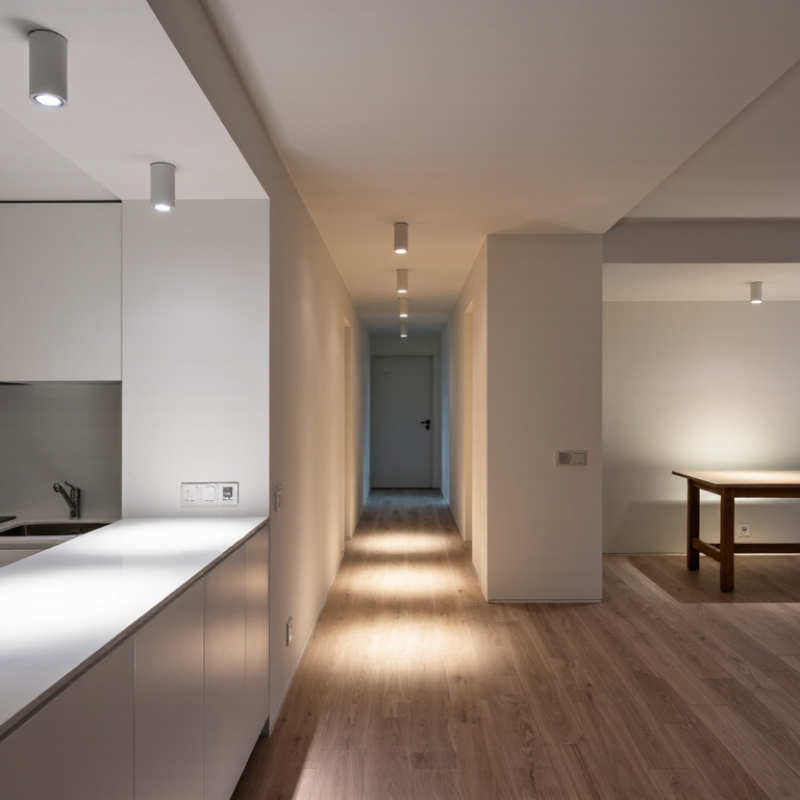
Understand the Design and Uses of Surface-Mounted Lights
Surface-mounted lights attach to the ceiling or wall without needing a recessed cavity. Their visible shape becomes part of the room’s design, from a slim circular disc to a shallow drum with a diffuser. This makes them useful where ceilings are concrete, shallow, or difficult to alter. The trade-off is visibility: a bulky fixture can feel intrusive in a low room.
Think about what the light needs to do. In a hallway, a wide diffuser can soften shadows and spread light along the floor. Over a kitchen work area, a brighter fixture with a more focused beam may help reveal details on the counter. For a bedroom, softer, warmer light often feels calmer. Check the fixture’s stated brightness, beam spread, and suitability for damp locations before buying. That matters.
Measure the ceiling height and note nearby cabinets, doors, or beams. A fixture that looks compact in a shop can seem oversized above a narrow entryway. Color temperature also changes how finishes appear; cool light may make warm wood look less inviting. Keep it simple. Compare the light’s dimensions with the space, and consider whether its diffuser can be cleaned easily. A perfect-looking choice on paper may still cast an awkward shadow, so the room’s actual layout deserves a second look.
How to Choose a Surface-Mounted Light: Design and Uses
| Light Type | Typical Design | Common Uses | Key Selection Considerations |
| Flush-mount ceiling light | Shade or diffuser sits close to the ceiling. | Bedrooms, hallways, closets, and rooms with low ceilings. | Choose a size that suits the room and a diffuser that spreads light evenly. Check the fixture’s height against available headroom. |
| Semi-flush-mount light | Fixture hangs a short distance below the ceiling, often with an open gap above the shade. | Living rooms, dining areas, and bedrooms with moderate ceiling height. | Offers a more decorative profile than a flush mount. Confirm there is enough clearance below the fixture for safe movement. |
| Surface-mounted LED panel | Thin, flat panel fixed directly to the ceiling or wall. | Kitchens, utility rooms, offices, and other areas needing broad, uniform light. | Compare lumen output, color temperature, dimming compatibility, and color rendering. A wide diffuser can help reduce harsh shadows. |
| Surface-mounted spotlight | One or more adjustable heads attached to a ceiling plate or track. | Kitchens, corridors, display areas, and rooms where selected objects or zones need emphasis. | Check whether the heads can be aimed as needed and whether the beam angle suits the task. Multiple heads can improve coverage. |
| Linear surface light | Long, narrow fixture mounted directly to a ceiling or wall. | Workshops, garages, offices, corridors, and kitchen work zones. | Match the fixture length and light distribution to the area. For task lighting, position it to limit shadows and glare on the work surface. |
| Surface-mounted wall light | Compact fixture fixed to a wall, with light directed upward, downward, or both ways. | Hallways, stairways, bathrooms, bedside areas, and exterior entrances when rated for outdoor use. | Choose the direction and spread of light for the intended purpose. Check the required damp- or wet-location rating for the installation area. |
Before choosing: Consider ceiling height, room size, the lighting task, desired appearance, mounting and wiring conditions, dimmer compatibility, and the fixture’s safety rating for its location. Light output and color appearance vary by product.
Assess Room Lighting Needs and Installation Conditions
Assess the room by what happens there, not by its name. A living room used for reading needs different light from one used mainly for relaxing. The Illuminating Engineering Society’s Lighting Handbook gives task-based illuminance guidance; detailed tasks often need roughly 300–500 lux at the work surface. For a 10-square-metre room, 200 lux would equal about 2,000 lumens across the space, before accounting for dark walls or shaded corners. Treat this as a planning estimate, not a guarantee.
Check the ceiling before choosing a surface-mounted fixture. Note the junction-box position, ceiling material, available depth, and any beams or pipes that could block installation. In bathrooms or covered outdoor areas, verify that the fixture’s damp- or wet-location rating matches the actual exposure. A flush fitting can suit a low ceiling, while a deeper fitting may create glare or feel intrusive. Measure twice. The forgotten detail is often the box.
Consider how the room is used after dark, too. A dimmer can help shift from bright cleaning light to a softer evening setting, but only when the fixture and control are compatible. The U.S. Department of Energy’s 2020 LED Adoption Report estimated that LEDs made up 47% of U.S. general-illumination installations in 2019. Efficiency is useful, but it does not settle comfort: check the fixture’s lumen output, colour temperature, and beam spread against your room. I would still test the light near the actual reading chair; plans can look right on paper and feel wrong at night.
Compare Light Types, Brightness, Color, and Controls
Surface-mounted lights work well where ceilings cannot accommodate recessed fixtures. Flush mounts sit close to the ceiling; semi-flush models leave a small gap and spread light more visibly. Linear fixtures suit kitchen counters and long hallways. Check the fixture’s dimensions against the room, and note whether nearby doors or cabinets could block its light.
Compare brightness in lumens, not watts. The U.S. Department of Energy’s LED Lighting factsheet reports that LEDs use at least 75% less energy and can last up to 25 times longer than incandescent lighting. For color, 2700–3000 K creates a warm, relaxed feel; 3500–4000 K appears cleaner for task areas. A high color-rendering index helps food, wood, and fabric look more natural. Choose dimmable controls only when the fixture and dimmer are compatible. That detail is easy to overlook.
Tips: Read the lumen and color-temperature labels before buying. Test a sample in the room if possible; paint and daylight can shift how light feels. I’d avoid choosing by appearance alone. A beautiful diffuser can still leave a desk too dim.
Choose a Fixture Size, Style, and Energy Rating
How to Choose a Surface Mounted Light?
Choose a fixture that fits the room, not just the ceiling box. In a narrow hallway, a compact, low-profile light helps keep the ceiling visually open. In a larger kitchen, one small fixture may leave dim patches on counters. Measure the ceiling area and check the fixture’s diameter and lumen output before buying. There is no perfect size formula; ceiling height, furniture, and existing light all change the result.
Match the style to nearby finishes. A simple white fixture can blend into a pale ceiling, while a metal rim can echo cabinet handles or door hardware. Look at the diffuser, too: frosted covers soften glare, while clear ones may show individual LEDs. Color temperature matters. Warm white often feels gentler in bedrooms, while neutral white can make work surfaces easier to see. The same number on a box can look different in your actual room.
Check the energy rating and compare lumens with watts. The U.S. Department of Energy reports that LED lighting uses at least 75% less energy and can last up to 25 times longer than incandescent lighting. That is a useful benchmark, but fixture design and dimmer compatibility still affect performance. Read the product label for wattage, expected life, and dimming details. A highly efficient light is not automatically comfortable. Stand beneath a sample if possible; glare is easy to underestimate on a product page.
Check Electrical Compatibility, Safety, and Maintenance Needs
Before choosing a surface mounted light, check its voltage and frequency against your home’s supply. A match is necessary, but it is not the whole check. Confirm that the fixture fits the existing junction box and that the box can support its weight. A broad metal base may look simple, yet its mounting points might not align with older boxes. Small details matter. If you plan to use a dimmer, verify that both the light and dimmer are compatible. Never assume wire colors tell the full story; wiring can vary. Turn off power at the breaker, and ask a qualified electrician to assess uncertain wiring or mounting. A quick check is not worth a loose fixture or a shock risk.
Think about where the light will go. A bathroom or covered outdoor area may need a fixture rated for moisture, while a dry hallway usually has different needs. Check the safety marking and installation instructions for the intended location. Maintenance deserves attention, too. Dust collects along the rim of flush-mounted lights, especially near kitchens, so a smooth, accessible design is easier to clean. Replaceable lamps can simplify future repairs; integrated light sources may require replacing more of the fixture. Neither choice is automatically better. It is easy to focus on brightness and forget servicing, and I would still measure ceiling clearance twice—small errors are surprisingly easy to make.