
Firefighting Drones are unmanned aircraft designed to support crews during dangerous fireground operations. They combine flight controllers, satellite positioning, cameras, thermal sensors, and approved communications links. From above, an operator can inspect a roof, trace a fire’s edge, or locate heat through smoke. Live video can reach an incident command team through radio, cellular, or other authorized networks. Some heavy-lift models carry water, foam, or specialized payloads, but capacity and flight time remain limited. Small systems usually provide intelligence rather than suppression. The difference is important.
NFPA’s Fire Loss in the United States During 2023 estimated 1,388,500 fires and 3,670 civilian fire deaths. It also reported approximately $23.3 billion in direct property damage. These figures show why faster aerial awareness can influence evacuation decisions and crew placement. NFPA 2400 provides a professional framework for public-safety UAS selection, operations, maintenance, and training. NIST research and field testing also emphasize dependable communications, sensor performance, and human decision-making. A thermal image is useful, not infallible. Hot metal, steam, and reflective surfaces can confuse interpretation. Wind can ground a drone. Battery limits can interrupt surveillance at the worst moment. This is where operational experience matters: crews must verify drone intelligence against building conditions, weather, hose lines, and direct observations. The following guide explains how Firefighting Drones fly, sense, communicate, and assist. It also examines their limits, because impressive footage is not the same as reliable operational evidence.
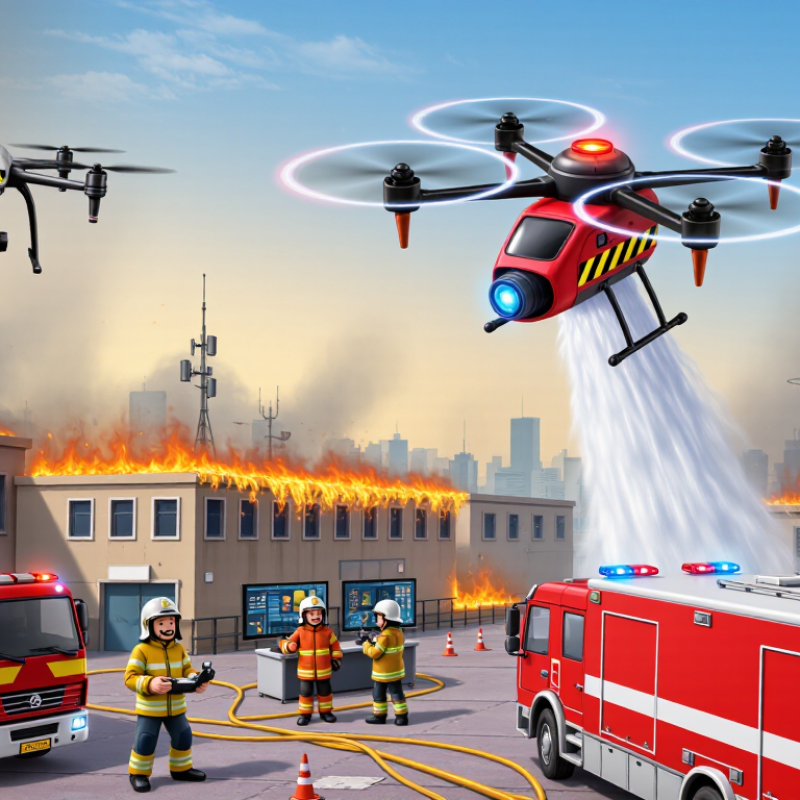
Firefighting drones are remotely operated aircraft designed to support emergency crews from above. They commonly carry thermal cameras, zoom lenses, gas sensors, and bright lights. Some models can also transport limited fire-suppressing materials. A trained operator controls the drone while software stabilizes its flight and records live images.
A live map can matter. From a safe distance, the drone can scan a burning roof, warehouse, forest edge, or collapsed structure. Thermal imaging helps reveal hot spots hidden beneath smoke or damaged surfaces. Crews may use this information to choose safer entry points and direct water more accurately. The drone also helps monitor changing wind, flames, and hazardous areas without placing another person inside.
Their value is clearest when visibility and access are poor. However, they are not perfect tools. Thick smoke, rain, strong wind, and reflective metal can distort readings. Batteries limit flight time, especially when cameras, lights, and sensors operate together. Operators need practical training, not only a remote controller. Field teams may also misread a bright thermal image as active fire when it is heated equipment. That limitation deserves attention. Drones can reduce unnecessary exposure, but they cannot replace experienced firefighters, ground inspections, or reliable communication.
Firefighting drones are unmanned aircraft designed to support crews during fires. They combine an airframe, motors, batteries, sensors, and a secure control system. Thermal cameras detect heat through smoke and show changing temperature patterns. A normal camera adds visual detail in daylight. The operator can compare both images on a ground monitor. The view changes quickly.
The flight controller stabilizes the drone against wind and keeps movements precise. Satellite positioning helps maintain location awareness, while obstacle sensors reduce collision risks near trees, towers, or buildings. Some models carry loudspeakers, lighting units, or small water-mist systems. These payloads can assist with observation and limited suppression, but they cannot replace ground crews. Batteries remain limiting. Heavy equipment shortens flight time.
Reliable communication is equally important. The control link sends live video, temperature data, battery status, and aircraft position. If the signal weakens, automated safety functions may hold position or guide the drone home. In field operations, however, smoke, heat, wind, and metal structures can disrupt readings. Thermal images may also mistake hot roofing for an active flame. Human verification remains essential.
Maintenance teams should inspect propellers, batteries, sensors, and data logs before each mission. Operators need practical training, not only classroom knowledge. They must understand weather changes, airspace restrictions, emergency procedures, and the limits of each sensor. A drone can find a hidden hotspot. It cannot always explain what caused it. That gap deserves careful judgment.
Firefighting drones are remotely operated aircraft designed to detect, map, and assess active fires. Their value begins before crews enter dangerous areas. The National Interagency Fire Center recorded 56,580 wildfires and 2,693,910 acres burned in the United States during 2023. That scale makes rapid aerial intelligence essential.
Thermal cameras identify heat patterns through darkness and light smoke. RGB cameras show flames, damaged structures, and changing smoke direction. Some systems combine both images with GPS data, creating live fire-perimeter maps for incident commanders.
A drone may reveal a glowing hotspot beneath a collapsed roof, where firefighters cannot safely look. It can also measure temperature differences across forest edges, helping crews distinguish active fire from cooled ash. The National Fire Protection Association reported 1,388,500 U.S. fires in 2023, including structure and outdoor incidents, showing why flexible detection tools matter.
The technology is not magic. Dense smoke, rain, reflective metal, and hot concrete can confuse thermal sensors. Battery limits also interrupt surveillance during long operations. Readings require trained interpretation, not blind trust. In practice, crews compare drone images with ground reports, weather data, and previous flight paths. A false hotspot can waste time. A missed ember can spread quietly. Sensor calibration, clear communication, and careful human judgment remain central to reliable fire assessment.
Firefighting drones are unmanned aircraft designed to carry water, foam, or retardant into hazardous areas. Their value becomes clearer during wildfires, industrial incidents, and unstable building fires. The National Interagency Fire Center recorded 56,580 wildfires and 2,693,910 burned acres in the United States during 2023. Those figures show why remote suppression tools deserve serious attention.
Some drones carry an onboard tank and release water through an electric pump or directional nozzle. Others connect to ground hoses, allowing continuous delivery instead of repeated refilling. Water cools burning materials, while foam clings to surfaces and reduces oxygen contact. Retardant can create a temporary barrier ahead of advancing flames. Thermal cameras help operators identify glowing hotspots behind smoke, although thick smoke can still confuse sensors. Small targets matter.
Payload capacity remains a practical limitation. A drone may deliver accurate bursts, but it cannot match a full-sized aircraft or fire engine for volume. Operators must plan flight time, battery changes, wind direction, and safe distances around power lines. The National Institute of Standards and Technology has emphasized reliable sensing and communication as essential needs for emergency-response robotics. Real deployments still require trained crews and verified suppressant choices. The technology is promising, but not flawless. Sometimes, a precise drop is simply too small.
| Firefighting Drone Function | Suppressant or Payload | How It Is Delivered | Typical Firefighting Use | Key Advantages | Main Limitations and Safety Considerations |
|---|---|---|---|---|---|
| Direct Suppression High-flow aerial application | Water Used for cooling burning materials and reducing heat. | A tank, bucket, or onboard pump releases water through a nozzle or controlled drop system. Flow rate and release timing can be adjusted during flight. | Exterior fires, roof fires, vegetation fires, hot spots, and areas that are difficult or dangerous for ground crews to reach. | Water is widely available, non-toxic in normal firefighting use, and effective at absorbing heat. A drone can place water more precisely than a conventional aircraft in confined areas. | Water supplies are limited by payload capacity. Wind can scatter the stream or drop, and water may be ineffective when access to the burning material is blocked. |
| Flame Control Surface fire knockdown | Class A Foam Water mixed with a foaming agent for ordinary combustibles such as wood, paper, and vegetation. | The drone uses a proportioning system or pre-mixed tank to create a foam blanket or wetting solution before discharge. | Structure exteriors, wildland fuels, mulch, timber, and other porous materials where longer-lasting wetting is useful. | Foam can improve water coverage, increase wetting, and help suppress surface flames by separating fuel from heat and oxygen. | The correct concentration is important. Foam residue may affect soil and waterways, and the operating team must follow local environmental and cleanup requirements. |
| Flammable-Liquid Protection Vapor and flame suppression | Class B Foam Formulated for flammable liquids such as fuels, solvents, and oils. | A compatible foam system applies a continuous blanket over the liquid surface or the surrounding spill area. | Fuel spills, industrial liquid-fire incidents, storage areas, and spill containment zones when the suppressant is approved for the specific fuel. | Foam can reduce vapor release and limit the contact between flammable liquid and air. | Not every foam is suitable for every flammable liquid. Application must be coordinated with incident commanders because disturbing a burning liquid can spread the fire. |
| Extended Protection Preventive barrier application | Fire Retardant Chemical mixtures designed to slow ignition and fire spread rather than rapidly extinguish active flames. | The drone sprays or drops the retardant onto vegetation, structures, or fuel breaks ahead of a moving fire. | Wildland fire containment, protection of exposed structures, and reinforcement of control lines. | Retardant can remain effective after water has evaporated and may help reduce the rate of fire spread. | It generally does not replace direct attack on intense flames. Application near waterways, crops, wildlife, or populated areas requires environmental and operational controls. |
| Specialized Suppression Powder or agent discharge | Dry Chemical Powder Agents used primarily for certain flammable-liquid, gas, or energized-equipment fires. | A pressurized canister or metered hopper releases powder toward the flame zone. | Small, localized incidents involving flammable liquids, combustible gases, or electrical equipment, where the agent is approved for the hazard. | Dry chemical can interrupt combustion quickly and does not conduct electricity in the same way as a water stream. | Limited payload and short effective application time make it unsuitable for many large outdoor fires. Powder can reduce visibility and may require extensive cleanup. |
| Cooling and Re-Ignition Control Precision spot treatment | Water Mist Fine droplets that provide cooling over a targeted area. | Specialized nozzles atomize water into small droplets. The drone makes repeated passes or hovers at a safe distance. | Hot spots, smoldering debris, enclosed exterior spaces, and localized cooling after visible flames have been reduced. | Fine droplets provide a large surface area for heat absorption and can reduce water use for small, concentrated hot spots. | Mist is highly sensitive to wind and may not penetrate deep fuel beds. It is not automatically suitable for energized electrical equipment or every enclosed space. |
| Situational Awareness Detection and targeting support | No Suppressant Thermal cameras, optical cameras, air-quality sensors, and mapping systems. | Sensors transmit live imagery and measurements to the pilot or incident command team. Some systems can mark heat signatures and map fire boundaries. | Locating hot spots, monitoring fire growth, assessing roof or industrial hazards, and guiding suppressant placement. | Improves visibility in smoke or darkness and reduces the need to expose personnel to unstable structures, extreme heat, or hazardous air. | Sensors can be affected by smoke, steam, reflective surfaces, and heat saturation. The drone still requires trained operators, airspace coordination, and reliable communications. |
| Delivery Process Payload release cycle | Water, Foam, or Other Approved Agent The selected agent depends on fuel type, fire behavior, location, and environmental requirements. | The basic cycle is: assess the fire, select the agent, load the payload, fly to a safe release position, discharge the agent, verify the result, and repeat as needed. | Incidents where accurate placement, rapid reconnaissance, or reduced personnel exposure is more important than carrying very large quantities. | Drones can support operations in steep terrain, industrial sites, damaged buildings, and other locations where conventional access is difficult. | Battery endurance, payload weight, wind, heat, smoke, communications, restricted airspace, and collision risks can limit operations. Drones must be integrated with the incident command system and kept clear of crewed aircraft. |
Operational note: Firefighting drones are generally a targeted support tool rather than a complete replacement for engines, hoses, aerial tankers, or trained fire crews. Suppressant selection and deployment should be based on the fuel involved, fire behavior, local regulations, environmental requirements, and incident-command procedures.
What Are Firefighting Drones and How Do They Work?
The Benefits and Limitations of Firefighting Drones
Firefighting drones are remotely piloted aircraft equipped with thermal cameras, zoom lenses, and mapping sensors. They fly above flames, transmit live images, and help crews understand changing conditions. Some models also detect heat patterns through smoke. According to the National Fire Protection Association’s Fire Loss in the United States During 2023 report, American fire departments responded to about 1,504,500 fires. This scale makes rapid aerial information extremely valuable. A drone can inspect a damaged roof before firefighters enter the building.
Their clearest benefit is distance. Thermal images may reveal trapped heat behind walls or inside roof spaces. Live video helps incident commanders position crews more safely. Drones can also map wildfire edges and identify blocked roads. The European Forest Fire Information System reported approximately 504,000 hectares burned across the European Union in 2023. In such conditions, aerial mapping can save critical minutes. Drones also reduce exposure to collapsing structures, toxic smoke, and unstable terrain. This is useful. Yet footage cannot extinguish flames.
Limitations remain serious. Battery endurance may last less than an hour, depending on weather, payload, and flight speed. Thick smoke can reduce visibility, while rain and strong winds can disrupt control. Hot updrafts may create dangerous turbulence near a fire. Radio interference can also interrupt live video. Thermal cameras are helpful, but they can misread reflective metal or hidden heat pockets. Operators still make mistakes. A drone provides evidence, not perfect judgment, and trained firefighters must interpret every image within the wider emergency scene.
