What Is a CNC Machining Center Used For?
A CNC machining center is a computer-controlled machine designed to produce precise parts through operations such as milling, drilling, boring, and tapping. Its automatic tool changer can move from one cutter to another without stopping for a manual change. On a shop floor, that may mean a steel block becomes a finished housing in one setup, with holes and flat surfaces aligned to tight tolerances.
Professor Yusuf Altintas is a recognized researcher in machining dynamics. A practical paraphrase of his work is: “Stable cutting depends on controlling tool motion, cutting forces, and vibration.” That matters because a capable machine alone cannot guarantee a good part. Tool choice, workholding, programming, and operator judgment all affect the result. Small details count.
Cnc Machining Centers are used across industries that need repeatable components, including automotive, aerospace, medical-device, and general equipment manufacturing. Three-axis models handle many everyday jobs; four- and five-axis machines can reach complex surfaces with fewer setups. This can improve accuracy and reduce handling, though advanced equipment also brings higher programming and maintenance demands. It is not a shortcut for every part. A simple bracket may be faster and cheaper on a less complex machine. Understanding what a machining center does—and where its limits matter—helps buyers and manufacturers choose equipment based on the part, production volume, and required precision.
What Defines a CNC Machining Center?
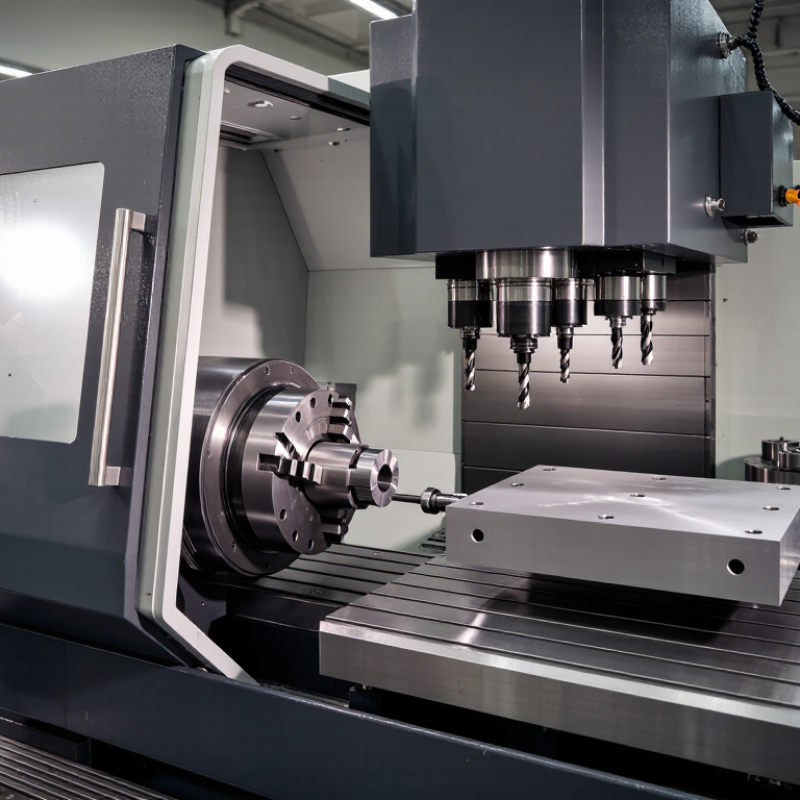
A CNC machining center is a computer-controlled machine built to cut material with repeatable, programmed movements. Its defining feature is the combination of a powered spindle, controlled axes, and an automatic tool changer. The spindle rotates a cutting tool, while the machine moves the tool or workpiece along precise paths. A tool changer can swap drills, end mills, or other cutters without requiring an operator to change each one by hand. That matters. One setup can support several operations on the same part.
Most machining centers have an enclosed work area, a worktable, and a control system that follows programmed instructions. Three-axis models move along the X, Y, and Z directions; some machines add rotary axes for angled features. The exact configuration varies. The term is not used identically in every workshop, so a machine’s capabilities are clearer than its label. In practice, check its axis count, tool capacity, spindle range, and work envelope. A small metal housing may fit comfortably, while a long plate may exceed the table’s usable travel. Even a capable machine depends on secure workholding and a well-planned program; automation does not fix a poor setup.
How Its Automated Machining Process Works
What Is a CNC Machining Center Used For?
How Its Automated Machining Process Works
A CNC machining center makes parts by moving a cutting tool and workpiece along programmed axes. The operator secures raw stock in a vise or fixture, then loads a machining program. The controller follows tool paths, changes tools from its magazine, and coordinates spindle speed, feed, and coolant. A probe may check the stock’s position before cutting begins. Small details matter.
During a cycle, the machine removes material in stages: rough cuts clear bulk stock, while finishing passes create precise surfaces and edges. Sensors and alarms can flag issues such as tool wear, but automation does not guarantee a perfect part. A loose fixture or incorrect offset can still cause scrap. The International Federation of Robotics’ World Robotics 2023 report recorded 553,052 industrial robots installed worldwide in 2022, a 5% annual increase. That figure reflects wider factory automation, not CNC machining centers alone.
Tip: Before production, simulate the tool path and verify offsets, workholding, and tool clearances. Watch the first part closely, especially around thin walls and deep pockets. A careful setup takes time, but skipping checks can cost more.
What Is a CNC Machining Center Used For?
Machining centers automate operations such as milling, drilling, and boring from a programmed sequence. A 3-axis machine moves along X, Y, and Z; 4- and 5-axis configurations add rotary axes, which can provide access to more workpiece surfaces and may reduce repositioning between operations. The chart shows the number of axes in common configurations.
Which Operations and Materials It Can Handle
A CNC machining center can mill flat faces, cut pockets, shape contours, and drill accurate hole patterns. Many machines also tap threaded holes or bore existing openings to a controlled diameter. The spindle rotates the cutting tool, while programmed axes move the workpiece or tool along planned paths. Some centers use multiple axes to reach angled surfaces with fewer repositioning steps. That sounds simple. It isn’t. Tool access, workholding, and chip removal can affect the result as much as the cutting path.
These machines commonly process aluminum, carbon steel, stainless steel, brass, and engineering plastics. Some setups can also cut titanium, but heat control and tool wear need careful attention. Aluminum may allow faster cutting, while stainless steel often needs steadier feeds and effective coolant. Plastics can deform or melt if tools, speeds, or clamping pressure are poorly chosen. A center’s capacity depends on its rigidity, spindle power, tooling, and setup—not just its programmed capabilities. Even a capable machine may leave rough edges or inaccurate features when a part is poorly supported. Those details are easy to underestimate.
Where CNC Machining Centers Are Commonly Used
CNC machining centers are common in automotive, aerospace, medical-device, energy, and general machinery production. They mill, drill, and tap parts with repeatable accuracy. A three-axis center can machine brackets and pump housings, while five-axis equipment reaches angled surfaces on turbine components. The right choice depends on part geometry, material, tolerance, and production volume.
Automotive shops use machining centers for engine blocks, transmission cases, and fixtures. Aerospace suppliers machine lightweight structural parts from aluminum and titanium, often removing material from several sides in one setup. Medical-device makers produce small, precise components, where tool wear and surface finish need close attention. Energy manufacturers machine valve bodies and pump components that must withstand pressure and repeated use. The fit is practical. Yet a complex machine is not automatically the best option for simple, low-volume parts.
Automation is shaping these factory settings, too. The International Federation of Robotics’ World Robotics 2024 report estimates 4.28 million industrial robots were operating in factories worldwide in 2023. That figure describes robots, not CNC machining centers, but it shows how common automated production has become. In a machining cell, a robot may load a blank, while the center cuts it and an operator checks dimensions with gauges. Some shops still rely on manual loading; workflow matters as much as machine capability.
How Machine Types Match Different Production Needs
A CNC machining center cuts, drills, and mills parts through computer-controlled tool movements. Its value depends on matching the machine’s layout and capabilities to the job. A vertical machining center suits many flat or accessible surfaces, such as mounting plates and housings. It offers convenient loading and a clear view of the work area. For heavier parts or several sides requiring machining, a horizontal center can reduce repositioning and help move chips away from the cutting zone. Setup matters.
Five-axis machines reach angled surfaces and complex contours with fewer setups. They can be useful for turbine-like components, medical parts, or shaped molds, but their added capability may not justify the cost for simple, repeatable parts. Production volume also matters. A shop making hundreds of similar components may benefit from automation, while short runs often favor quick changeovers and straightforward programming. The best fit is not always the most advanced machine; estimating tool access, tolerances, and cycle time can reveal trade-offs that are easy to miss.
Tips: Compare the part’s largest dimensions, required tolerances, and number of setups before choosing a machine type. Ask how operators will load stock and remove finished parts. Test a representative part when possible. Real production can expose awkward clamping or tool-clearance issues that drawings do not show.