China Top Titanium Sheets Supplier for Global Buyers
Choosing the right Titanium Sheets supplier affects performance, cost, and project reliability. Global buyers need more than attractive prices. They need consistent grades, accurate dimensions, clean surfaces, and complete documentation.
Professor George Lütjering, a respected titanium metallurgy expert, has emphasized, “Titanium combines low density, high strength, and excellent corrosion resistance.” This balance explains its use in aerospace structures, chemical equipment, marine systems, medical devices, and demanding industrial applications. However, material selection still requires care. Grade 2 may suit corrosion-focused equipment, while Grade 5 often serves high-strength applications. The correct decision depends on temperature, forming requirements, welding conditions, and service environment.
An experienced China supplier should provide traceable mill certificates, chemical analysis, mechanical test results, and inspection records. Thickness tolerance matters. So does edge quality. A sheet arriving with slight waviness can create serious problems during cutting or forming. Packaging also deserves attention, especially during long-distance shipping. Protective film, moisture control, and reinforced pallets reduce avoidable surface damage.
Reliable suppliers communicate clearly before production begins. They confirm ASTM, AMS, EN, or customer-specific requirements. They also explain what they can and cannot guarantee. That honesty matters. No supplier gets every detail right, and buyers should question vague promises. Sample approval, third-party inspection, and batch traceability can strengthen confidence. This guide examines how to evaluate China’s Titanium Sheets manufacturers, compare technical capabilities, and build a dependable supply process for global projects.
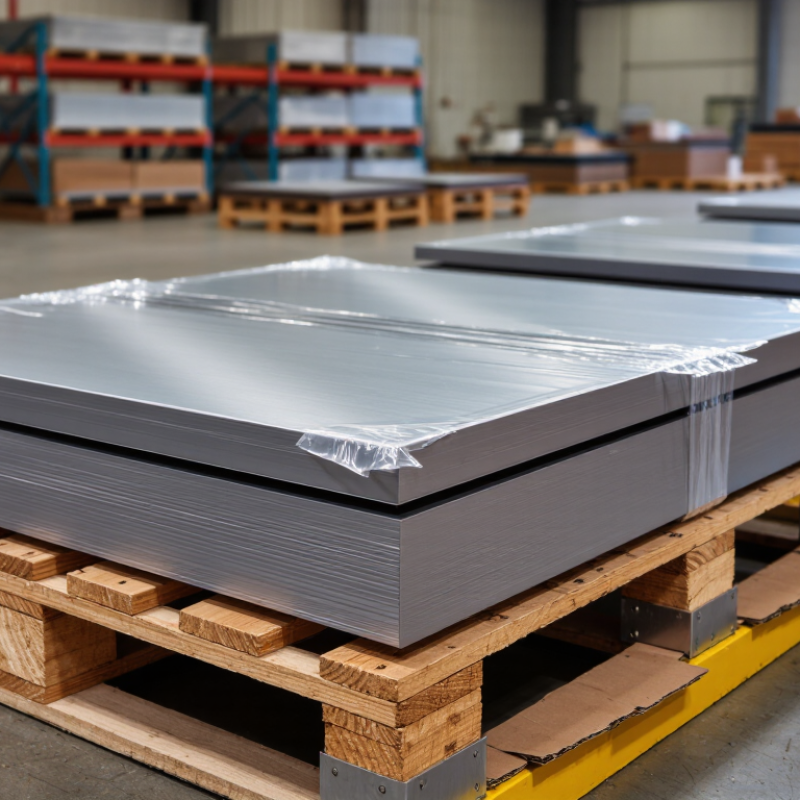
Titanium Sheet Fundamentals: 4.51 g/cm³ Density and 1,668°C Melting Point
China Top Titanium Sheets Supplier for Global Buyers
Titanium Sheet Fundamentals: 4.51 g/cm³ Density and 1,668°C Melting Point
Titanium sheet has a density of about 4.51 g/cm³, much lower than steel. This helps reduce weight in aerospace, chemical, marine, and medical equipment. Its melting point reaches approximately 1,668°C, showing strong resistance to extreme heat. However, melting point does not equal safe operating temperature. Alloy composition, surface condition, stress, and atmosphere can change real performance.
During purchasing, experienced buyers should confirm the titanium grade, sheet thickness, tolerance, and surface finish. Grade 2 is often selected for corrosion resistance and forming performance. Grade 5 provides higher strength but may require different fabrication controls. Inspection records should include chemical composition, mechanical properties, dimensions, and ultrasonic testing when required. Small details matter.
Tips: Request a material certificate and sample inspection before bulk production. Check flatness under proper lighting, not only by touch. It is easy to overlook edge cracks. Ask how the supplier controls oxygen and nitrogen content, especially for heat-treated sheets. I have found that clear specifications prevent more problems than attractive prices. Still, specifications can be misunderstood, so written confirmation is worth repeating.
Choosing Grades: ASTM Grade 2, Grade 5, and 6Al-4V Applications
China Top Titanium Sheets Supplier for Global Buyers
Choosing Grades: ASTM Grade 2, Grade 5, and 6Al-4V Applications
Selecting titanium sheet starts with service conditions, not price. ASTM Grade 2 offers strong corrosion resistance, moderate strength, and dependable formability. It suits chemical vessels, heat exchangers, seawater equipment, and architectural components. Its clean surface and consistent thickness support easier fabrication. It is not the strongest option.
Grade 5 titanium, also called Ti-6Al-4V or 6Al-4V, provides much higher strength than Grade 2. Engineers often specify it for aircraft structures, medical devices, marine hardware, and high-load components. It performs well when weight reduction matters. However, forming requires greater control, especially with thicker sheets. Excessive heat can affect the finished properties.
Grade 6, commonly Ti-5Al-2.5Sn, is designed for demanding elevated-temperature applications. It offers useful creep resistance and stable mechanical performance in aerospace environments. The grade may be unnecessary for ordinary chemical processing. That decision deserves careful review.
Practical purchasing should include thickness tolerance, surface condition, ultrasonic testing, and heat-treatment records. Mill certificates should identify chemical composition and mechanical results. Request samples when bending, welding, or deep forming is critical. A small trial can reveal springback or edge cracking before full production. This step is often overlooked. Grade selection remains a balance between strength, fabrication behavior, corrosion exposure, and verified documentation.
China Top Titanium Sheets Supplier for Global Buyers - Choosing Grades: ASTM Grade 2, Grade 5, and 6Al-4V Applications
| Grade / Alloy | UNS Designation | Typical Chemical Composition, wt.% | Typical Density | Minimum Tensile Strength | Minimum Yield Strength | Key Characteristics | Common Sheet Applications | Common Product Standards |
| ASTM Grade 2 | R50400 | Ti: Balance
Fe: ≤ 0.30
O: ≤ 0.25
C: ≤ 0.10
N: ≤ 0.03
H: ≤ 0.015 | Approximately 4.51 g/cm³ | 345 MPa minimum | 275 MPa minimum | Excellent corrosion resistance, good ductility, strong weldability, and relatively easy cold forming. | Chemical processing equipment, heat exchangers, condenser plates, desalination systems, marine components, and architectural panels. | ASTM B265, ASTM B338, ASTM B367, ASTM B381 |
| ASTM Grade 5 | R56400 | Ti: Balance
Al: 5.50–6.75
V: 3.50–4.50
Fe: ≤ 0.40
O: ≤ 0.20
C: ≤ 0.08
N: ≤ 0.05
H: ≤ 0.015 | Approximately 4.43 g/cm³ | 895 MPa minimum | 828 MPa minimum | High strength-to-weight ratio, good fatigue performance, and reliable performance across aerospace and industrial temperature ranges. | Aircraft structures, engine components, pressure vessels, medical implants, fasteners, sporting equipment, and high-strength industrial parts. | ASTM B265, ASTM B348, ASTM B381, AMS 4911 |
| 6Al-4V | R56400 | Titanium alloy containing approximately 6% aluminum and 4% vanadium; exact limits depend on the applicable specification. | Approximately 4.43 g/cm³ | Typically 895 MPa minimum for Grade 5 sheet | Typically 828 MPa minimum for Grade 5 sheet | International alloy name for ASTM Grade 5; heat treatment and processing condition can significantly affect mechanical properties. | Aerospace skins and brackets, orthopedic and dental components, additive-manufactured parts, marine hardware, and precision machined components. | ASTM B265, ASTM F67/F136 where applicable, AMS 4911, ISO 5832-3 where applicable |
Selection Guide: ASTM Grade 2 is generally preferred for corrosion-focused and highly formable applications. ASTM Grade 5 is selected when high strength and low weight are priorities. 6Al-4V is the commonly used alloy designation for Grade 5, but final chemistry, mechanical properties, surface condition, dimensions, and certification should always be confirmed against the required product standard and supply condition.
ASTM B265 Requirements for Titanium and Titanium Alloy Sheets
China Top Titanium Sheets Supplier for Global Buyers
ASTM B265 Requirements for Titanium and Titanium Alloy Sheets
ASTM B265 defines requirements for titanium and titanium alloy strip, sheet, and plate. For global buyers, the material grade must match the intended service. Grade 1 offers high ductility and corrosion resistance. Grade 2 provides higher strength for general industrial use. Grade 5, commonly a titanium alloy, supports demanding applications. Each grade has different chemical and mechanical limits.
In practical export inspections, we check the heat number, grade, dimensions, surface condition, and test records. Chemical composition is verified through heat analysis. Tensile strength, yield strength, and elongation must meet the specified grade requirements. Thickness, width, length, and flatness also require careful measurement. Small deviations can create problems during forming or machining.
Surface quality matters. Sheets should be free from harmful cracks, seams, laminations, and excessive contamination. Pickled, annealed, or mechanically finished surfaces may follow different purchasing requirements. These details should appear clearly in the order contract. Do not rely on a generic certificate alone. Review the latest ASTM B265 edition, agreed supplementary requirements, and the material test report. A rushed inspection can miss edge damage. It happens. Clear records make corrective action easier and support dependable international purchasing.
ASTM B265 Requirements for Titanium and Titanium Alloy Sheets
Minimum specified room-temperature mechanical properties commonly referenced for ASTM B265 titanium sheet grades. Values are shown in MPa and represent minimum tensile strength and 0.2% yield strength requirements.
Global Buyer Specifications: Thickness, Width, Tolerance, and Surface Finish
China Top Titanium Sheets Supplier for Global Buyers
Global buyers often begin with thickness, but width and tolerance can decide whether a sheet fits production. Common titanium sheet thicknesses range from 0.5 to 6 millimeters, while heavier plates require separate rolling controls. Width may be standard or cut to a drawing. Please state the finished size, not only the nominal size. A small difference can create expensive trimming work.
Tolerance should match the material standard and the application. General commercial tolerance may be acceptable for formed parts, but precision housings need tighter control. We confirm thickness at several points, including edges and the center. Flatness matters too. A sheet can meet thickness requirements and still resist forming. That detail is often missed.
Surface finish affects welding, forming, and inspection. Pickled surfaces remove oxide scale and are common for fabrication. Bright or mechanically finished surfaces may suit decorative or close-contact parts. Specify roughness, such as Ra, when appearance or sealing matters. We can provide chemical composition, tensile results, dimensional records, and surface inspection reports. Identification testing is also useful when several titanium grades share a similar appearance.
Real projects are rarely perfect. Drawings sometimes omit corner radius, burr limits, or inspection locations. We ask for clarification before cutting. That may slow the quotation, but it reduces rework. One practical improvement remains: buyers should request a small sample when the surface finish is critical.
Quality Verification: Chemical Analysis, Tensile Strength, and Mill Test Reports
China Top Titanium Sheets Supplier for Global Buyers
Quality Verification: Chemical Analysis, Tensile Strength, and Mill Test Reports
For global buyers, titanium sheet quality begins with evidence, not polished promises. Experienced inspection starts with heat numbers marked on each bundle and linked to production records. A sample is taken from the agreed location, then tested under a documented procedure. Chemical analysis checks titanium grade and elements such as aluminum, vanadium, oxygen, nitrogen, and iron. Small variations matter. They can influence forming, welding, corrosion resistance, and service life.
Tensile testing measures yield strength, tensile strength, and elongation. These values should match the purchase specification and the stated test direction. Test temperature, specimen orientation, and gauge dimensions deserve attention. Without these details, a number may look precise but remain difficult to compare. Buyers should review the laboratory’s calibration status and ask whether results are traceable to recognized standards.
The mill test report connects the material to its history. It should identify the grade, heat number, dimensions, delivery condition, chemical results, mechanical results, and inspection date. Independent verification can compare the report with markings and physical measurements. Paperwork can still contain errors. No test system is flawless. That limitation deserves acknowledgment. A careful supplier welcomes questions, retains samples when practical, and corrects discrepancies before shipment. Clear records build confidence across borders.