
Skip to content

What Is the Best Wheel Diamond Cutting Machine in 2026?

Choosing the best Wheel Diamond Cutting Machine in 2026 depends on the wheels you process, your workload, and the finish you expect. A small repair shop may value quick setup and simple controls. A high-volume workshop may need automated measurement, repeatable programs, and steady cycle times. Details matter.

This guide compares the practical features behind a sound buying decision, including spindle stability, cutting accuracy, control software, workpiece clamping, and operator safeguards. It also considers setup time, maintenance access, training, and after-sales support. A polished sample cut is useful, but it cannot show how a machine performs across different wheel designs or a full working day.

Look closely at the specifications. Ask suppliers how accuracy is measured, which wheel sizes the machine can accommodate, and what routine calibration involves. If possible, inspect a live demonstration using a wheel similar to those in your shop. Real operating conditions can reveal small issues that brochures miss. Still, no single model is best for every buyer. Budget, available floor space, operator experience, and local service coverage all shape the right choice. This overview offers a clear framework for comparing options, while recognizing that published figures should be confirmed with the manufacturer before purchase.
What Is the Best Wheel Diamond Cutting Machine in 2026?

What Is a Wheel Diamond Cutting Machine?

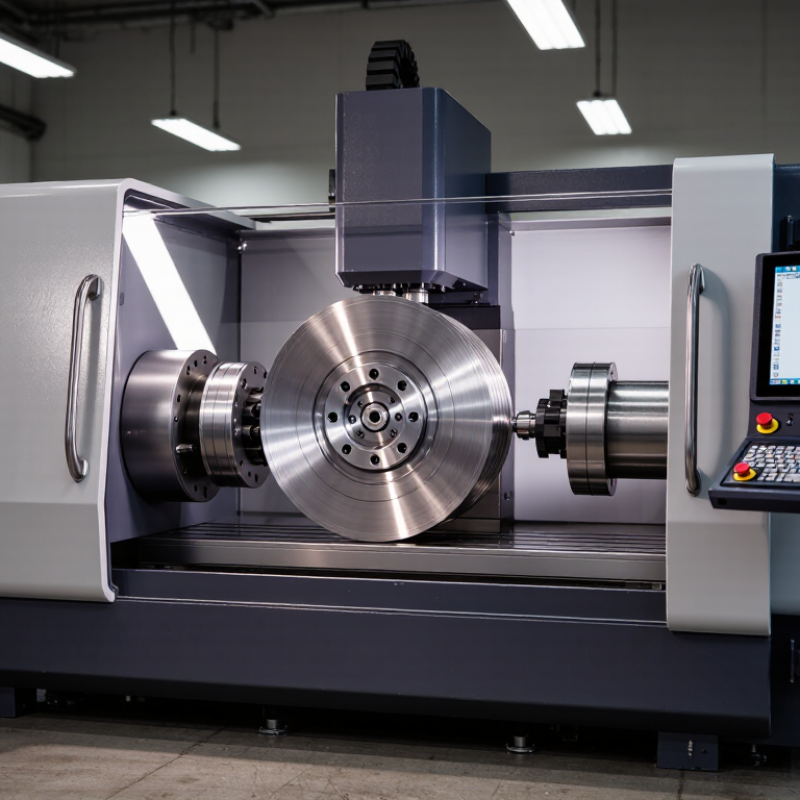
A wheel diamond cutting machine is a precision lathe designed to refinish the visible face of an alloy wheel. The wheel is secured on a spindle and rotated while a diamond-tipped tool removes a very thin layer of metal. This process can restore crisp lines and a bright, machined appearance. Not magic.

Before cutting, a technician checks the wheel for cracks, bends, corrosion, and previous repairs. The wheel must be centered and clamped firmly; even slight runout can produce uneven marks. Tool depth matters, too. Removing excessive material may weaken the face or erase details around the spokes. Small adjustments count.

A capable machine offers controlled movement, repeatable settings, and a clear view of the cutting area. The operator still makes critical decisions, including whether the wheel is suitable for refinishing and how much material can safely be removed. After cutting, the surface should be inspected for consistent lines, sharp edges, and remaining coating needs. A glossy finish alone is not proof of a sound repair. I would not trust appearance by itself.

How Does Diamond Cutting Shape a Wheel?

What Is the Best Wheel Diamond Cutting Machine in 2026?

How Does Diamond Cutting Shape a Wheel?

Diamond cutting reshapes a wheel’s visible face with a single-point cutting tool tipped with industrial diamond. A CNC lathe spins the wheel while the tool follows a programmed path across its surface. It removes a thin layer of coating and metal, revealing bright alloy beneath. Fine, even lines catch the light; uneven passes can leave visible rings or chatter marks. The machine’s rigidity, spindle accuracy, and tool control all affect the finish. Diamond cutting changes the surface, not the wheel’s basic structure.

The U.S. Geological Survey’s 2025 Mineral Commodity Summaries reports that synthetic diamond accounts for about 98% of industrial diamond used in the United States. That figure reflects diamond’s established role in demanding industrial cutting applications. It does not guarantee a perfect wheel finish. Setup still matters: dirt on the mounting face or a poorly secured wheel can spoil the cut. Small errors show.

Tips: Ask how the machine controls spindle runout and cutting depth. Check the wheel for cracks before machining, and confirm the proposed cut stays within its service limits. A mirror-like finish looks impressive, but removing too much material is not a cosmetic improvement. Sometimes the better choice is less cutting.

What Is the Best Wheel Diamond Cutting Machine in 2026?

How Does Diamond Cutting Shape a Wheel?

This chart compares the theoretical outer circumference of three example wheel diameters. Values are calculated using circumference = π × diameter; they are geometric calculations, not machine-performance measurements.

Diamond cutting machines machine the wheel face to create reflective surfaces and defined contours. The right machine depends on the wheel size, required finish, accuracy, and production needs; cutting the face does not inherently change the wheel’s outer diameter.

Which Machine Types Serve Different Wheel Materials?

The best wheel diamond-cutting machine depends on the wheel’s material, finish, and damage. Cast or forged aluminum alloy wheels often suit a CNC wheel lathe with a diamond tool and accurate probing. The probe maps the face, while controlled passes remove a thin layer to reveal a bright, precise finish. Repeatability matters. A rigid spindle and stable clamping help limit vibration and uneven cuts, especially around narrow spokes.

Steel wheels need a different assessment. Many have simpler painted profiles and are better served by conventional turning or refinishing equipment than a diamond-cut setup. Chrome-plated or heavily coated wheels also require caution: cutting through the surface can expose underlying material and change the appearance. Check the wheel’s construction and coating before choosing a process. Fit matters. A machine’s advertised capacity may not suit deep-dish faces, unusual offsets, or tight spoke gaps. In practice, this is where a tidy specification can mislead. Match the machine to the wheels you actually service, then verify its probing accuracy, guarding, and support for the required cutting path.

What Features Matter When Choosing a Machine in 2026?

A wheel diamond-cutting machine should hold the wheel firmly and keep spindle runout low. Ask for measured runout and repeatability, not just a brochure’s maximum speed. Then inspect a test cut under bright light: look for even tool paths, clean edges, and consistent finish across the face. Small details matter. Clamping marks can ruin an otherwise accurate result.

Check how the control handles wheel profiles, tool offsets, and repeat jobs. A clear interface helps operators set the cutting depth without guessing. Thermal stability matters too; heat can shift dimensions during long production runs. The U.S. Department of Energy’s 2015 Bandwidth Study estimated that motor-driven systems use about 68% of U.S. manufacturing electricity. That figure is not specific to wheel-cutting machines, but it supports asking about spindle efficiency, cooling, and energy use during normal operation.

Also assess guarding, dust extraction, maintenance access, and calibration support. Ask how quickly a technician can check alignment and replace worn cutting tools. I would not pretend one checklist fits every workshop: wheel sizes, output, and operator skill differ. There is no magic. Compare sample cuts and documented measurements from your own production conditions, not only demonstrations on carefully prepared wheels.

What Is the Best Wheel Diamond Cutting Machine in 2026? — What Features Matter When Choosing a Machine in 2026?
Machine configuration Best suited to Features to prioritize Main trade-off What to verify before purchase
Manual or basic bench machine Occasional cutting, simple operations, and workshops where an operator handles positioning and feed. Rigid frame, stable spindle, secure workholding, guarded cutting area, accessible controls, and suitable coolant or dust management. Results depend heavily on operator skill; repeatability and throughput are generally lower than with automated systems. Run a sample cut using the intended wheel material and dimensions. Check setup time, operator visibility, vibration, and safety provisions.
Semi-automatic machine Regular production of repeat jobs where consistent feed or cycle control is useful. Adjustable feed, repeatable stops, clear cycle controls, interlocked guarding, and accessible settings for different workpieces. Requires operator loading and setup; automation may be limited to selected movements or cutting steps. Confirm which motions are automated, how settings are changed, and whether the machine can repeat the required cut without manual repositioning.
CNC or programmable machine Complex profiles, multiple cutting steps, or production that needs stored and repeatable programs. Appropriate axis travel, compatible control software, program storage, repeatable workholding, and clear alarms and status indicators. Higher setup and training requirements; CNC capability does not guarantee accuracy without sound fixturing and process control. Request a demonstration with a representative part. Check program editing, post-processing needs, service support, and acceptance-test criteria.
Rotary or indexing configuration Work requiring cuts at multiple positions around a wheel or repeatable angular indexing. Secure rotary workholding, reliable indexing, adequate clearance, and a control method that matches the required angular sequence. Not every rotary setup suits every wheel size or geometry; fixtures may need to be changed for different jobs. Verify the usable workpiece diameter and thickness, indexing method, clamping access, and clearance through the complete cutting path.
Production-focused automated system High-volume work with stable part geometry and a defined, repeatable process. Consistent loading and clamping, cycle monitoring, chip or slurry management, maintainable guarding, and integration with the shop workflow. Can be less flexible for frequent product changes; actual output depends on loading, setup, cutting, and maintenance time. Measure a full production cycle during a trial, including loading and cleaning. Confirm changeover time, consumable requirements, and maintenance access.
Spindle and cutting-tool system All configurations; the correct combination depends on the wheel material, cut, and specified surface finish. Spindle speed and power matched to the application, compatible diamond tooling, suitable tool mounting, and accessible tool-change procedures. A higher spindle rating alone does not establish cutting quality or suitability; tooling and process settings must also match the job. Ask the supplier to identify compatible tool types and operating ranges for the application, and to demonstrate performance on the intended material.
Coolant, extraction, and safety package Any machine where cutting produces heat, debris, coolant mist, or airborne dust. Application-appropriate wet or dry process controls, effective guarding, emergency stops, interlocks, and accessible cleaning and maintenance points. Requirements vary with the material and process; a collection system must be compatible with the debris and coolant involved. Review the operating manual and site requirements. Confirm coolant filtration or extraction arrangements, guarding, and applicable local safety compliance.
Overall selection recommendation The “best” machine is the configuration that meets the required workpiece range, cut quality, repeatability, and production rate. Prioritize a successful sample cut, suitable workholding, controlled feed, appropriate tooling, safety, serviceability, and clear operating documentation. Comparing machines by a single headline specification can overlook tooling, setup, operator involvement, and total process needs. Use the same workpiece and acceptance criteria for each supplier trial; document cut quality, cycle steps, changeover, maintenance, and included accessories.

How Can Buyers Compare Performance, Cost, and Safety?

What Is the Best Wheel Diamond Cutting Machine in 2026?

Buyers should compare machines using the same wheel, cut depth, and finish target. Record cycle time, dimensional repeatability, setup time, and rejected parts. Ask for a live trial; brochure figures alone can hide operator and material differences.

The International Federation of Robotics reported 541,302 industrial robot installations worldwide in 2023 in its World Robotics 2024 report. That reflects wider automation adoption, not proof that any particular wheel machine is faster. Check whether automation actually reduces handling time in your shop.

Calculate total ownership cost, including diamond tooling, software, extraction, power, training, and service visits. Request the price and expected life of common wear parts.

For safety, inspect guarding, door interlocks, emergency stops, and chip and dust control during a real cutting cycle. The U.S. Bureau of Labor Statistics recorded 5,283 fatal work injuries across U.S. industries in 2023; this broad figure is not specific to wheel machining, but it underscores why safety checks deserve attention.

Tips: Bring a representative wheel and ask for a documented test cut. Compare the measured finish with your own acceptance criteria. Small details matter. Even a polished quote can leave maintenance costs unclear, so ask for those figures in writing.