
Sesame Grey Granite is valued for its quiet grey background, fine mineral speckling, and ability to suit both contemporary and traditional projects. Yet the name does not guarantee identical color. A slab can look cooler, darker, or more patterned under different lighting. Buyers should assess actual bundles, not rely on a polished sample alone.
Industry data offers useful context, but it has limits. The U.S. Geological Survey’s Mineral Commodity Summaries covers dimension-stone production and trade, while ITC Trade Map tracks international merchandise flows. Neither source isolates Sesame Grey Granite by commercial name. That distinction matters. Buyers must verify quarry origin, available block sizes, processing capacity, and export experience directly with suppliers. Request recent photographs, inspection records, and shipment references where available.
This guide presents seven suppliers for global buyers, with attention to product consistency, fabrication, documentation, and communication. Compare quotations carefully. Confirm slab thickness, finish, tolerances, packing, and lead time in writing. Ask for current stock images taken in natural light, then check whether the images show the same batch offered for sale. Small details can change a project’s result. Supplier websites also vary in how much evidence they provide, so this list should support—not replace—independent checks. Sesame Grey Granite can be a dependable specification, but only when the stone and the supplier both meet the project’s needs.
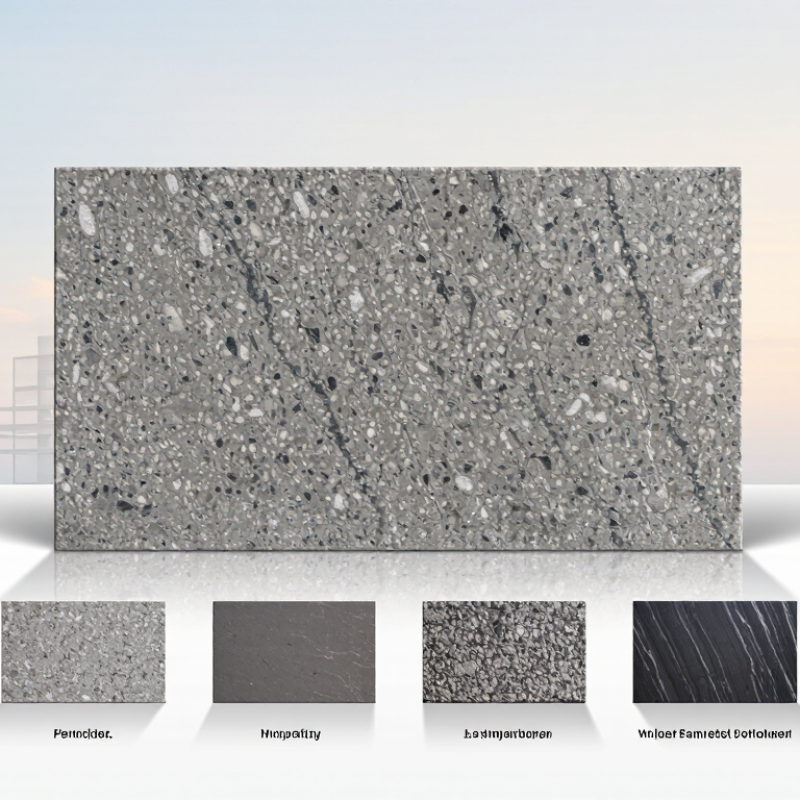
Sesame grey granite is an igneous stone with a fine, speckled appearance. Its grey background is dotted with lighter feldspar and darker mineral grains. The pattern suits projects that need texture without strong color contrast. No two slabs are exactly alike. Buyers should review full-size slabs, not just small samples, because grain size and shade can vary between blocks.
USGS Mineral Commodity Summaries 2024 estimated the value of U.S. dimension-stone production at about $460 million in 2023. This figure covers multiple stone types, not sesame grey granite alone, so it is market context rather than a product-specific forecast. In buildings, sesame grey granite is used for flooring, counters, wall cladding, steps, and exterior paving. Its hardness makes it useful in busy areas, though surface finish matters: polished stone can become slippery when wet.
For global projects, confirm slab thickness, finish, origin documents, and test results before ordering. Ask suppliers for water-absorption and flexural-strength data, preferably from accredited laboratory testing. Check several slabs under consistent lighting. A subtle mismatch can become obvious across a large lobby floor. Even careful selection cannot remove all natural variation; that limitation deserves attention in the design stage.
Evaluating a sesame grey granite supplier starts with the actual stone, not a polished brochure. Ask for recent photos of full slabs in neutral daylight. Sesame grey can contain dark grains, pale patches, and fine mineral lines. Compare the photos with a physical sample. A small tile may hide variation across a full slab. That matters.
Request details about the quarry or processing origin, slab thickness, and available finishes. Ask for recent test reports that identify the material tested, including water absorption and flexural strength where available. Generic certificates prove little. Check whether stated tolerances match your project drawings. For larger orders, request inspection photos or arrange an independent inspection before shipment. A clear answer is useful; a rushed promise deserves another question.
Review packing methods, crate labels, and loading photos, especially for long-distance freight. Ask how the supplier handles chipped edges or mismatched batches, and get the agreed procedure in writing. Contact previous trade customers if references are available. Even careful checks leave uncertainty: natural stone varies, and a sample can make a batch look more uniform than it is. I would leave room for that possibility in the selection process.
Seven leading sesame grey granite suppliers serve different needs. Quarry-owned exporters can provide clearer block origins and consistent production records. Regional processors offer polished slabs and may respond faster to custom sizes. Large wholesalers keep varied thicknesses in stock, while project fabricators can match stair treads, countertops, and wall panels. Direct-shipping exporters handle container planning. Custom-cut specialists focus on edges and precise dimensions. Multi-quarry sourcing firms can compare grades when one deposit has limited availability.
Ask each supplier for current slab photographs taken in neutral light. Sesame grey granite varies in grain, mineral flecks, and background tone. A small sample helps, but it cannot show every slab’s movement. Check thickness tolerance, finish, packing method, and replacement terms in writing. Request recent inspection records when available. Details matter.
Reliable suppliers answer specific questions without promising perfect uniformity. Ask how slabs are bundled and labeled, then compare those details with the packing list before shipment. For a large order, inspect several pieces from different bundles. It takes time. Buyers sometimes rely too heavily on one attractive sample; that is an easy mistake. A supplier’s clear communication is useful, though it does not replace independent inspection.
Sesame grey granite varies from batch to batch. A capable supplier explains those variations before a buyer approves an order. Ask for recent slab photographs, quarry or block details, and samples showing the actual finish. A small sample helps, but it cannot reveal every vein across a full container. Details matter.
When comparing seven suppliers, look beyond quoted prices. Check whether they can maintain agreed thickness, edge treatment, and surface finish across repeat orders. Request inspection records and clear tolerances for dimensions and shade variation. Ask how damaged pieces are documented and handled. Some suppliers provide careful grading but limited customization; others offer more options, with longer lead times. Neither is automatically better.
Export service is part of product quality. Confirm packing methods, container loading plans, shipping documents, and who coordinates inspection before dispatch. Wooden crates should protect corners and polished faces during handling. Get lead times and payment milestones in writing, then compare like-for-like offers. A supplier’s fast reply feels reassuring, though it is not proof of reliable production. I would still verify a full-size slab or production photos before committing. It takes extra time. The comparison is less tidy than a ranking suggests.
Supplier-specific details were not provided or independently verified. The anonymized entries below are a comparison template, not verified supplier profiles; confirm all claims and specifications directly before ordering.
| Candidate | Sesame Grey Granite Source | Product Range to Confirm | Quality Evidence to Request | Production Capability | Export Services to Confirm | Current Assessment |
|---|---|---|---|---|---|---|
| Candidate 1 | Quarry location and material identity: not verified | Confirm slabs, tiles, and available finishes | Request current lot photos, samples, and written specifications | Monthly output and lead time: not provided | Confirm packing, documentation, and shipment terms | Pending verification |
| Candidate 2 | Quarry location and material identity: not verified | Confirm cut-to-size options and dimensional limits | Request inspection records and agreed tolerances for the order | Equipment, capacity, and lead time: not provided | Confirm export packing method and port of loading | Pending verification |
| Candidate 3 | Quarry location and material identity: not verified | Confirm thicknesses, surface finishes, and edge options | Request representative samples and approval of the production lot | Batch consistency and production schedule: not provided | Confirm whether pre-shipment inspection is supported | Pending verification |
| Candidate 4 | Quarry location and material identity: not verified | Confirm availability for commercial or project quantities | Request agreed grading criteria and defect-acceptance terms | Order capacity and replenishment availability: not provided | Confirm container loading plan and export documents supplied | Pending verification |
| Candidate 5 | Quarry location and material identity: not verified | Confirm whether custom sizes and finishes are available | Request test reports if required for the intended application | Processing capability and lead time: not provided | Confirm booking coordination and shipment tracking support | Pending verification |
| Candidate 6 | Quarry location and material identity: not verified | Confirm stock availability and finish options | Request photos of the actual goods and a final packing list | Stock volume and dispatch time: not provided | Confirm protective packaging and damage-claim procedure | Pending verification |
| Candidate 7 | Quarry location and material identity: not verified | Confirm product formats and order minimums | Request written color variation expectations and inspection terms | Minimum order, capacity, and lead time: not provided | Confirm destination-market documentation requirements | Pending verification |
Before selecting a supplier, compare written quotations against the same product specifications, inspect representative material, and confirm payment, delivery, packaging, and claims terms in the sales contract.
Selecting a sesame grey granite supplier starts with the stone, not the sales brochure. Ask for current photos and videos of the actual block or slab lot. Grey backgrounds can carry different amounts of black and white flecking. A small sample helps, but it cannot represent every slab. Details matter. Request slab dimensions, finish options, tolerances, and available test reports. Check whether the reports identify the tested material and the laboratory. For large projects, approve a full-size mock-up before production.
A reliable quotation should specify the stone grade, finish, quantity, packing method, production time, and shipping terms. Confirm the loading port and ask how the slabs will be braced inside their crates. Poor packing can turn sound stone into chipped edges and costly delays. Review the draft invoice and packing list before shipment. I would not treat a polished sample as a promise; it is an easy assumption to make. Independent pre-shipment inspection can help confirm quantities, visible defects, and crate markings.
Before paying a deposit, calculate more than the stone price. Include freight, insurance, unloading, and possible storage costs. Ask a customs broker to check the import documents and requirements for your destination. These can vary by country and shipment. Keep written records of approvals and agreed tolerances. They make disagreements easier to resolve. A first order may still reveal a mismatch in shade or finish, so allow time to inspect the shipment before installation.
