
Chemical Heating systems influence product quality, energy use, and plant reliability. A jacketed reactor needs controlled heat across its vessel wall, while a storage tank may rely on warming coils. These applications are not interchangeable. The right choice depends on process temperature, fluid properties, equipment materials, and the consequences of uneven heating.
This guide compares options for global buyers, including thermal-fluid, electric, steam-based, and direct-fired systems. Each has practical trade-offs. Thermal-fluid units can serve several process points, but require suitable fluid management and monitoring. Electric systems offer precise control in some settings, though available power and operating costs matter. Steam may fit established facilities, yet pressure equipment and site infrastructure shape its suitability. Details decide.
Buyers should examine temperature range, heat-up time, control accuracy, insulation, and maintenance access. Ask suppliers for documented performance data, material specifications, service plans, and references from comparable applications. Confirm that equipment can meet applicable local requirements; these differ by destination and installation. A polished specification sheet is useful, but it cannot replace a process review. A small oversight, such as poor sensor placement, can undermine otherwise capable equipment.
The best system is rarely the one with the largest capacity or lowest quoted price. It should match the actual duty, integrate with existing controls, and remain serviceable over time. No comparison can settle every site-specific question. That is worth remembering. Use this overview to build a shortlist, then verify assumptions with qualified process and equipment specialists before purchase.
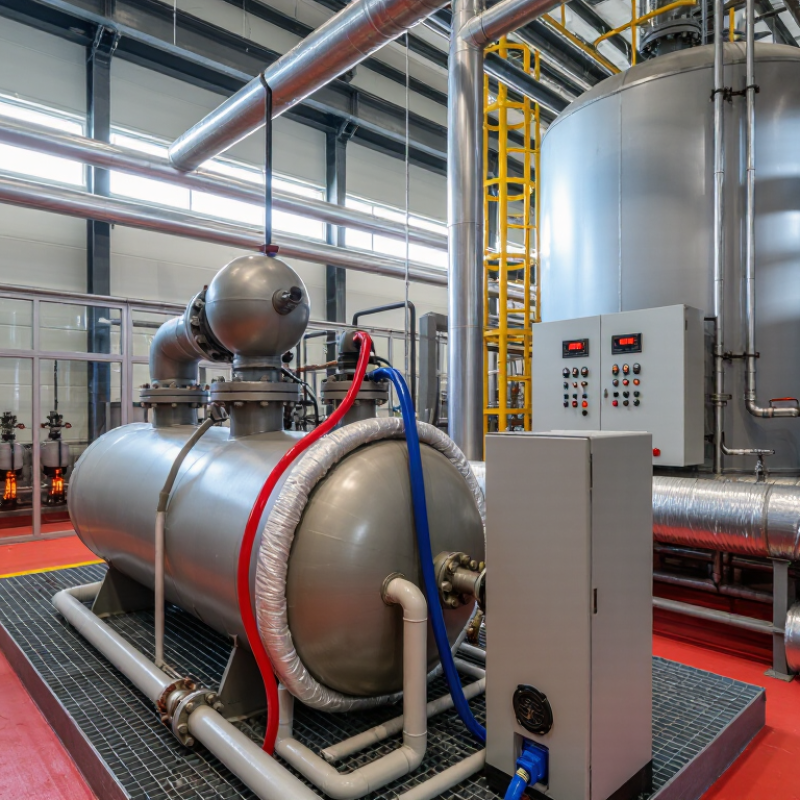
2026 Best Chemical Heating Systems for Global Buyers
How Chemical Heating Systems Generate and Transfer Heat
Chemical heating systems convert fuel or electricity into usable process heat. Burners heat air, steam, or thermal fluid; electric elements generate heat at the point of use. Heat moves by conduction through vessel walls, convection in circulating fluids, and, in some furnaces, radiation. A jacketed reactor, for example, may use a pump to circulate hot fluid around its steel shell. Mixing and sensor position affect the batch’s actual temperature.
Scale matters. The U.S. Department of Energy’s 2022 Industrial Decarbonization Roadmap estimates process heating accounts for about 51% of U.S. manufacturing energy use. The IEA’s Energy Efficiency 2023 report puts industry’s share near 37% of global final energy consumption. These figures cover broad industrial sectors, not chemical heaters alone. They show why buyers should compare heat loss, ramp-up time, control range, and recovery performance—not just rated output. Fouling or weak insulation can widen the gap between a setpoint and the product temperature.
Tips: Measure at the product. Log inlet, outlet, and vessel temperatures during a production cycle. Verify fluid compatibility and maintenance access with a qualified process engineer; specifications alone can mislead.
Exothermic reactions generate heat; a transfer medium—such as air, water, or steam—carries it to process equipment. These indicative engineering ranges show why the transfer method matters: higher heat-transfer coefficients can move heat faster, while actual performance depends on operating conditions, equipment design, and the fluid properties.
Chemical plants rarely need one universal heating system. Selection depends on process temperature, heat-transfer medium, batch pattern, and contamination risk. Steam boilers suit reactor jackets, cleaning loops, and other duties needing stable, distributed heat. Thermal-oil systems serve higher-temperature processes without relying on high-pressure steam, but fluid condition and leak detection need regular attention. Direct-fired heaters work well for furnaces and dryers, where rapid, intense heat is useful. They require careful combustion control.
The IEA’s Tracking Industry 2023 report estimates that industry accounts for about 37% of global energy use, underscoring the impact of process-heat choices. Industrial heat pumps can recover heat from compressors, wastewater, or exhaust for lower-temperature duties. The IEA’s 2022 report, The Future of Heat Pumps, describes industrial applications and emerging systems approaching 200°C. Electric resistance or induction heating offers precise control for tanks, trace lines, and conductive materials. Peak electricity demand can be a constraint. Fit matters most.
For global buyers, compare fuel or electricity costs, heat losses, maintenance, and downtime at the plant boundary. A fouled exchanger may undermine projected efficiency. Not every line fits. Check actual temperature curves and load swings before sizing equipment; published benchmarks cannot replace site measurements.
In 2026, compare chemical heating systems against the actual heat duty, not a headline efficiency figure. Check how each system performs at full load and during frequent low-load periods. Ask for fuel or electricity use, heat-up time, temperature stability, and expected maintenance intervals. Small differences matter. A unit that runs efficiently in a test may behave differently with a viscous process fluid, long pipe runs, or cold start-ups. Request operating data under conditions close to your site, and confirm what assumptions sit behind those figures.
Safety and operating costs belong in the same comparison. Review temperature limits, pressure protection, leak detection, alarms, and shutdown arrangements with qualified site personnel. Check that inspection and servicing tasks are practical for your team. Then estimate total costs across the expected service life, including energy, spare parts, downtime, and operator training. A low purchase price can look appealing. It may not stay appealing after a few difficult maintenance visits. A neat spreadsheet can still miss real-world delays, so leave room for uncertainty and verify key estimates with site records or a careful trial.
| Heating System | Typical Process Temperature | Energy Performance | Common Chemical-Plant Uses | Key Safety Considerations | Operating-Cost Factors | Best Fit |
|---|---|---|---|---|---|---|
| Steam boiler and distribution system | About 100–250°C for many saturated-steam applications; higher temperatures require suitable pressure and system design. | Boiler fuel-to-steam efficiency is commonly around 80–95% on an HHV basis, depending on equipment, load, and operating conditions. Distribution and condensate losses reduce delivered efficiency. | Reboilers, reactors with jackets or coils, heat exchangers, cleaning, and sites with several users needing heat. | Control pressure, water quality, condensate return, and water hammer risk. Provide code-compliant pressure-vessel protection, inspections, and trained operators. | Depends on fuel price, boiler efficiency, steam leakage, condensate recovery, blowdown, and maintenance. Fuel cost alone does not represent total delivered-heat cost. | Plants with a shared steam network, varied heat loads, or existing steam infrastructure. |
| Thermal-fluid (hot-oil) heater and loop | Often about 150–400°C, depending on the heat-transfer fluid, equipment design, and fluid’s recommended operating limits. | Fuel-fired heater efficiency is commonly in the approximate 80–92% HHV range. Actual process efficiency also depends on insulation, circulation, and heat-exchanger performance. | High-temperature reactor jackets, dryers, distillation duties, and processes where low-pressure heat at elevated temperature is useful. | Check fluid flash point and thermal stability. Prevent leaks and overheating; hot-fluid spills can cause burns or fires. Use suitable expansion, leak detection, ventilation, and fire protection. | Includes fuel or electricity, pump power, fluid replacement, filtration, leak repairs, and heat losses. Fluid degradation can increase maintenance costs. | Processes needing relatively high temperatures without using high-pressure steam at the point of use. |
| Electric resistance heating | From low-temperature duties to several hundred degrees Celsius or more, depending on heater type, materials, and process design. | Typically converts about 95–100% of electrical input into heat at the point of use. This figure excludes electricity-generation and transmission losses. | Small or modular reactors, tank heating, trace heating, laboratory or pilot equipment, and sites requiring precise local control. | Use electrical protection and temperature interlocks. Prevent dry firing and overheating; select suitable enclosures and electrical equipment for hazardous areas. | Usually driven by the delivered electricity tariff, demand charges, and operating hours. A low point-of-use conversion loss does not necessarily mean the lowest energy bill. | Sites with reliable, competitively priced electricity, modest heat loads, or a need for localized and responsive heating. |
| Direct-fired process heater | Can serve high-temperature duties, often above 200°C; achievable conditions depend on burner, process coil, materials, and design. | Fuel-to-process efficiency varies widely; approximately 75–90% HHV is a useful broad screening range for many designs, not a guaranteed rating. | Large continuous process streams, furnaces, and duties requiring rapid, high-temperature heat transfer. | Requires burner management, flame safeguards, combustion ventilation, emissions controls, and protection against tube overheating. Assess process-fluid leakage and fire exposure. | Depends on fuel tariff, excess air, stack temperature, load factor, emissions requirements, and maintenance. Heat recovery can materially affect fuel use. | Large, steady, high-temperature duties where direct heat transfer is appropriate and emissions requirements can be met. |
| Industrial heat pump | Commonly suited to hot-water and lower-temperature process duties; some industrial designs can supply roughly 90–160°C, depending on technology and heat source. | Often delivers about 2–5 units of heat per unit of electricity (COP) under favorable conditions. COP falls as required output temperature rises or source temperature falls. | Preheating, wash processes, low-temperature reactors, heat recovery, and upgrading waste heat for reuse. | Assess refrigerant hazards, pressure equipment, ventilation, electrical protection, and safe access. Refrigerant selection and local regulations matter. | Depends on electricity and alternative-fuel prices, source-heat availability, temperature lift, operating hours, and integration costs. Compare seasonal performance, not just rated COP. | Sites with a steady low-grade heat source, suitable temperature requirements, and favorable electricity-to-fuel economics. |
Comparison note: Temperature and efficiency figures are broad, representative screening ranges; actual performance depends on design, operating conditions, local codes, and measurement basis. Compare delivered-heat cost using local energy prices and measured system performance. For a first estimate, fuel-heated systems use fuel price per unit of energy divided by seasonal efficiency; electric resistance uses electricity price divided by its point-of-use efficiency; heat pumps use electricity price divided by seasonal COP. Include auxiliary power, maintenance, emissions controls, and distribution losses in a project-level comparison.
Choosing a chemical heating system starts with the process, not a catalogue. Map the required temperature range, heat-up time, batch size, and control tolerance. A jacketed reactor needing steady, moderate heat may suit a thermal-fluid loop; a compact process requiring rapid response may favor electric heating, if the site’s power supply can support it. For temperature-sensitive materials, check how evenly heat reaches the vessel wall. Hot spots matter.
Local conditions can change the answer. Check winter design temperatures, water quality, fuel availability, grid reliability, and maintenance skills. At a humid coastal site, corrosion protection and enclosure ratings deserve attention. At a remote facility, spare-part lead times may outweigh a modest efficiency gain. Steam systems also depend on dependable water treatment and condensate return. Details get missed.
Compare operating needs, not just purchase prices: controls, insulation, cleaning access, and safe shutdown behavior all affect uptime. Ask qualified process and mechanical engineers to verify material compatibility, pressure limits, relief devices, and applicable site requirements before procurement. I would resist claiming one technology is best everywhere. Early estimates are imperfect. A small trial can reveal slow warm-up, temperature drift, or awkward maintenance access before full installation.
For global buyers, a chemical heating system is only as reliable as its installation plan. The International Energy Agency’s Energy Efficiency 2023 report estimates that industry used about 37% of global final energy in 2022. That figure covers all industry, not chemical heaters alone, but it shows why heat loss and control accuracy matter. A poorly insulated pipe run can waste energy every operating hour.
Before installation, confirm the required temperature range, fluid compatibility, flow rate, and hazardous-area classification with qualified engineers. Map sensor locations and test alarms, shutoffs, and interlocks during commissioning. Record baseline temperatures and energy use. Small details matter. IEC 60519 covers safety for industrial electroheating installations; buyers should check which parts apply to their equipment and local rules.
Maintenance plans should include inspections for insulation damage, leaks, sensor drift, and heat-transfer-fluid degradation. Keep service records and define replacement limits before failures occur. Compliance varies by market. Verify local electrical, pressure-equipment, emissions, and workplace-safety requirements with the relevant authorities before procurement and startup. Even a thorough checklist can miss a site-specific rule, so treat compliance review as ongoing work, not a one-time approval.
