Best Cement Sealer Types for Your Project?
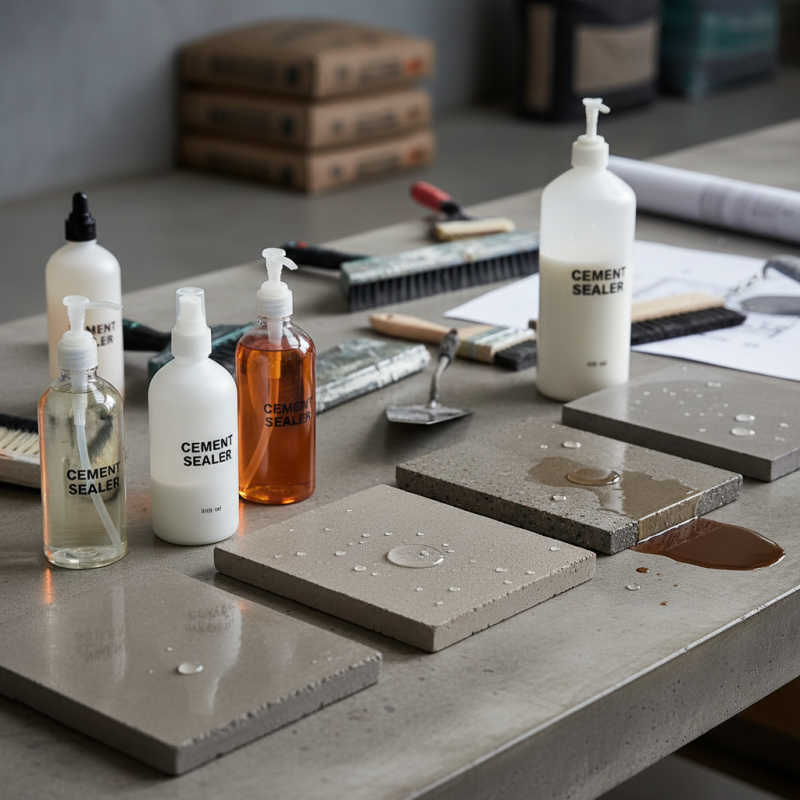
Choosing the right cement sealer can greatly impact your project's success. Whether you are sealing floors or countertops, a good cement sealer protects against stains and moisture. This selection process can be overwhelming with so many options available.
Cement sealers come in various types, each with its own strengths and weaknesses. Some offer high durability, while others provide a more natural appearance. Understanding the differences can help you make the best choice for your needs.
It's essential to consider the project's specific requirements. Think about the environment and the level of foot traffic. While some sealers may seem perfect at first glance, their long-term performance may fall short. Take your time and evaluate the options carefully.
Overview of Cement Sealers and Their Importance
Cement sealers play a crucial role in maintaining the integrity of concrete surfaces. They protect against moisture, oil, and stains. This protection extends the lifespan of the material. Applying a good sealer is essential, especially in high-traffic areas. Without it, the concrete can crack or discolor over time.
Different types of sealers serve various purposes. Some are designed for outdoor use, while others work better indoors. Each type has unique characteristics. Choosing the right one can be challenging. Many factors come into play, such as the climate, the type of concrete, and the specific project needs.
Despite their importance, many still overlook sealers. Some do not apply them correctly, leading to poor results. It’s vital to read instructions carefully. Neglecting this can result in peeling or bubbling surfaces. This reflects the need for careful consideration in selection and application. Test patches can be helpful if unsure.
Best Cement Sealer Types for Your Project
| Sealer Type |
Description |
Recommended For |
Durability |
Application Method |
| Acrylic Sealers |
Water-based sealers that provide a thin coat and enhance color. |
Decorative surfaces, patios, driveways. |
Moderate |
Spray, roller, or brush. |
| Epoxy Sealers |
Thicker and more durable sealers ideal for heavy traffic. |
High traffic areas, garages, industrial floors. |
High |
Roller or brush, requires proper mixing. |
| Silicone Sealers |
Flexible sealers with excellent water repellency. |
Walls, roofs, and areas exposed to moisture. |
Very High |
Spray or brush. |
| Polyurethane Sealers |
Gives excellent gloss and durability, resistant to scratches. |
Commercial and residential applications. |
Very High |
Roller or brush, can be tricky to apply. |
| Penetrating Sealers |
Soaks into the concrete to provide long-lasting protection. |
All types of concrete surfaces. |
High |
Spray, roller, or brush. |
Types of Cement Sealers: Water-Based vs. Solvent-Based
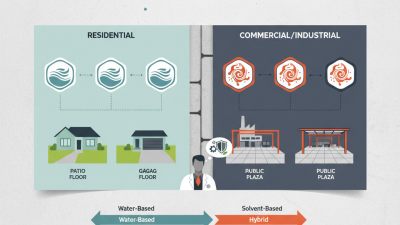
When choosing a cement sealer, it's vital to know the differences between water-based and solvent-based options.
Water-based sealers are easy to apply and clean up. They have less odor, making them user-friendly for indoor projects.
These sealers penetrate the surface, providing a protective layer against moisture. However, they might not be as durable in heavy usage areas.
Solvent-based sealers, on the other hand, offer superior protection. They create a thick, resilient layer over the concrete.
This makes them ideal for outdoor surfaces exposed to harsh weather. The downside is that they have a strong smell and require longer drying times.
This can be challenging for some projects.
Tip: Always test a small area first. This helps you see how the sealer interacts with your concrete.
Be mindful of the temperature and humidity, as they can affect drying times.
When you consider your project's specifics, think about foot traffic and exposure.
A high-traffic area may benefit from a solvent-based sealer, despite its drawbacks. Conversely, in low-use interiors,
water-based might suffice. Always weigh the pros and cons.
It's a process of choosing based on needs, not just preferences.
Selecting the Right Cement Sealer for Your Project Needs
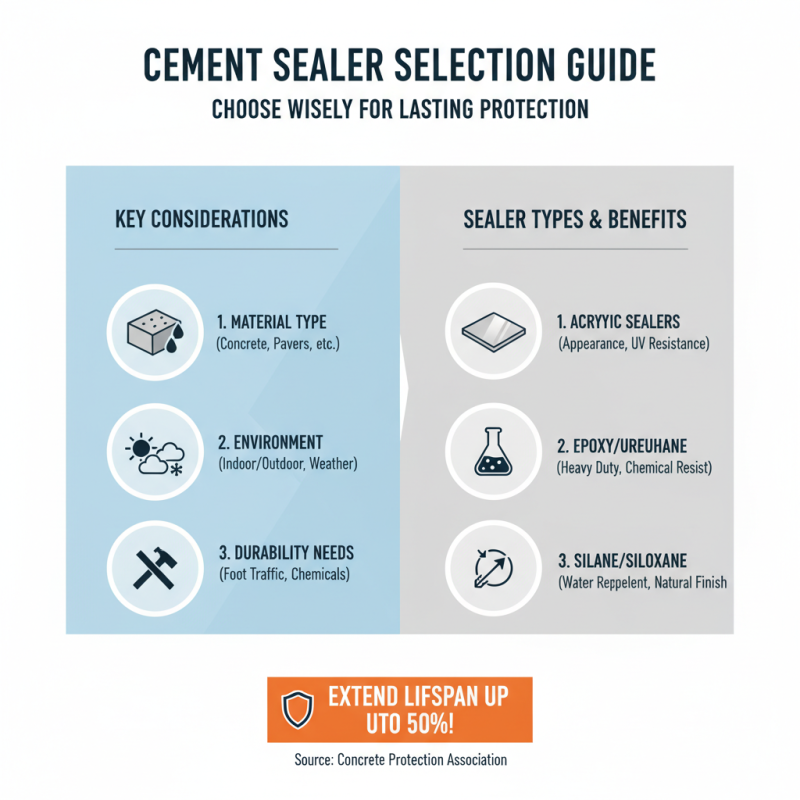
When selecting the right cement sealer for your project needs, it’s crucial to understand the materials involved. Different environments demand different sealers. For instance, outdoor concrete that faces harsh weather will require a more durable formulation. According to research from the Concrete Protection Association, a high-quality sealer can extend the lifespan of concrete by up to 50%.
Consider the specific characteristics of your project. Some sealers are designed for glossy finishes, while others provide a matte appearance. The Industrial Concrete Sealers report highlights that 70% of users favor natural-looking sealers for aesthetics. However, many overlook the long-term maintenance. A gloss sealer may require more frequent reapplication, which can lead to higher costs.
Another point worth reflecting on is the potential health risks associated with some sealers. Many products contain volatile organic compounds (VOCs), which can negatively impact air quality. A study from Environmental Concrete Solutions found that nearly 30% of sealers tested exceeded safe VOC levels. This can be a significant concern for indoor projects. Always check for low-VOC options to ensure a safer environment. Choose wisely to meet not just aesthetic needs but also health and durability standards.
Application Techniques for Optimal Cement Sealing Results
Proper application techniques are essential for achieving optimal cement sealing results. Before starting, ensure the surface is clean and free from contaminants. Reports indicate that contaminants can reduce sealer adhesion by up to 40%. This cleaning step is critical for long-lasting performance.
When applying the sealer, the weather matters. Ideal conditions include dry days with moderate temperatures. Extreme heat or cold can affect curing time and performance. Always apply the sealer evenly. Uneven application may lead to patchy results, something many DIYers face.
Tips: Use a roller for larger areas to achieve a uniform coat. For corners and edges, a brush works best. Don’t rush. Allow proper curing time between coats. It's tempting to apply a second coat too soon, but this can lead to peeling or bubbling down the line.
Remember, practice makes perfect. Assess your technique after each project. Learning from mistakes can lead to improved sealing outcomes in the future.
Maintenance Tips for Long-Lasting Cement Sealers
Cement sealers are vital for protecting surfaces. Proper maintenance ensures their longevity. Regular cleaning is key. For optimal results, sweep the surface before cleaning. This removes dirt and debris. Consider using a pH-neutral cleaner. Harsh chemicals can damage the sealer.
Annual inspections are crucial. Look for signs of wear or damage. Moisture can be a problem. Waterproofing helps reduce absorption. A 2020 report indicated that 30% of concrete deterioration is due to moisture-related issues. Resealing may be necessary every three to five years.
Temperature fluctuations can affect the sealer. In colder climates, use caution during freezing temps. This can lead to cracks. A professional recommendation found that sealers respond differently in varying conditions. Keep an eye on your sealer's lifespan. Making adjustments can prolong its life.
Best Cement Sealer Types for Your Project