What Is the Best Adjustable Pipe Wrench for Global Buyers?
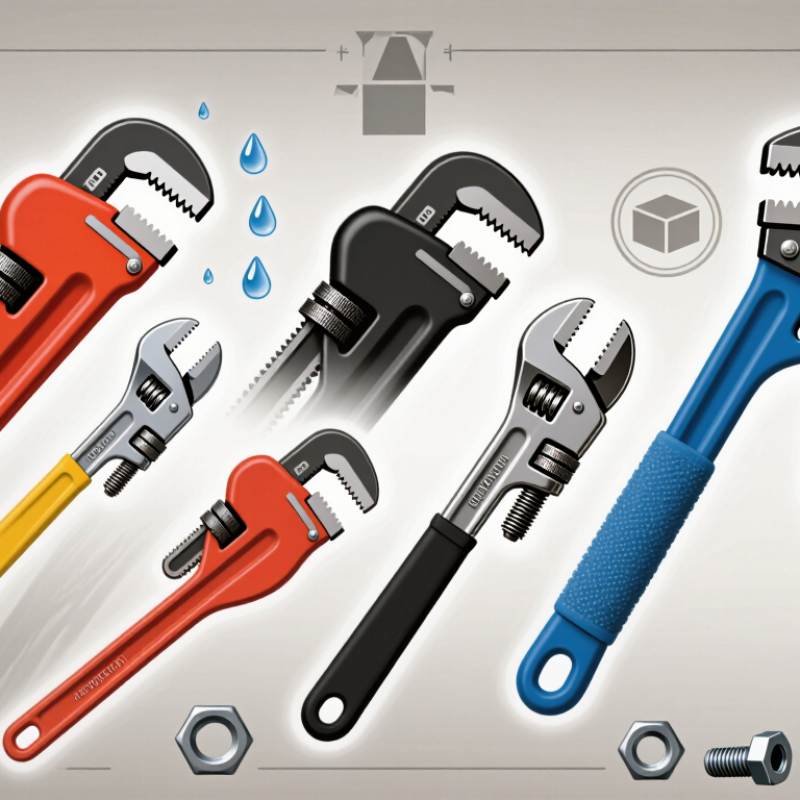
Choosing the best Adjustable Pipe Wrench for global buyers requires more than comparing prices or jaw sizes. A wrench that performs well in a dry workshop may struggle on wet job sites, coated pipes, or oversized fittings. Buyers must examine jaw capacity, alloy strength, handle comfort, corrosion resistance, and replacement support.
Tool expert Roy Berendsohn offers a practical principle: “Choose the tool for the task, not the label.” That advice matters here. An adjustable model should grip firmly without crushing softer pipe surfaces. Its adjustment mechanism should move smoothly, yet resist shifting under heavy pressure. A textured handle can help when gloves are damp or oily. Small details matter.
Global purchasing adds another layer. Product measurements may use inches or millimeters. Packaging quality can affect long-distance delivery. Warranty terms may also vary by market. A reputable manufacturer should provide clear specifications, inspection information, and realistic load guidance. Unverified claims deserve caution.
No wrench wins every situation. That is the uncomfortable part. Some models offer excellent leverage but feel tiring after repeated use. Others are compact, yet their jaw opening may disappoint. Our evaluation will compare these trade-offs through real working conditions, material quality, usability, and long-term value. The goal is not to name the most expensive tool. It is to identify the Adjustable Pipe Wrench that global buyers can trust for their specific applications.
Define “Best” by ASME B107.110 Pipe-Wrench Performance Requirements
What Is the Best Adjustable Pipe Wrench for Global Buyers?
Define “Best” by ASME B107.110 Pipe-Wrench Performance Requirements
For global buyers, “best” should mean dependable performance, not the largest jaw opening. ASME B107.110 provides a practical benchmark for evaluating pipe wrenches. It addresses functional requirements such as jaw engagement, handle strength, adjustment movement, and resistance to working loads. These details matter when a wrench grips painted, dirty, or slightly damaged pipe.
A useful inspection starts with the jaw. The teeth should contact the pipe firmly without rocking. The adjustment nut should move smoothly, but it must not feel loose. During controlled load testing, the handle should resist bending and permanent deformation. Buyers should request test records, dimensional information, material details, and clear product markings. Documentation is not decoration. It helps compare suppliers across different markets.
Field conditions can expose weaknesses that catalog photos hide. A wrench may open widely yet slip on a narrow pipe. A heavy handle may feel strong but increase fatigue during overhead work. I have also seen buyers focus too much on surface finish. That is an imperfect shortcut. Tooth geometry, jaw alignment, and verified load performance deserve more attention. ASME B107.110 compliance can support a reliable purchase decision, but it does not replace checking size, application, user training, or local workplace requirements.
Compare Jaw Capacity Using NIST’s Exact 25.4 mm-per-Inch Conversion
For global buyers, jaw capacity should be compared in millimetres, not only inches. NIST Special Publication 811 defines one inch as exactly 25.4 millimetres. Therefore, a 1-inch jaw equals 25.4 mm, 1.5 inches equals 38.1 mm, and 2 inches equals 50.8 mm. A 2.5-inch capacity reaches 63.5 mm. These figures remove rounding errors between regional product sheets.
Measure the maximum round pipe, not the wrench’s overall length. A wider jaw may handle a 50.8 mm pipe, but its practical grip depends on tooth depth, jaw alignment, and handle access. ASME B107.110 provides a recognized framework for pipe-wrench performance and dimensional requirements. NIOSH ergonomic guidance also links forceful gripping and awkward wrist positions with higher hand and wrist strain risks. That makes handle clearance important, especially during overhead work. Small details matter.
A useful buying test is simple. Convert every listing with 25.4 mm per inch, then compare the stated pipe diameter. Some sellers round 38.1 mm to 38 mm, which is acceptable for searching but weak for specification checks. My first comparison can still mislead if the seller measures across the open jaws instead of a supported pipe. Ask for both measurements. That extra question often exposes the real capacity.
What Is the Best Adjustable Pipe Wrench for Global Buyers? - Compare Jaw Capacity Using NIST’s Exact 25.4 mm-per-Inch Conversion
Reference comparison of common heavy-duty adjustable pipe-wrench size classes | Nominal Wrench Length | Exact Metric Length | Representative Maximum Jaw Opening | Exact Metric Jaw Opening | Typical Application | Approximate Tool Mass | Portability Rating |
| 6 in | 152.4 mm | 0.75 in | 19.05 mm | Small threaded fittings, valves, and compact maintenance work | 0.35 kg | Very high |
| 8 in | 203.2 mm | 1.00 in | 25.40 mm | Indoor plumbing, light service work, and general repairs | 0.60 kg | High |
| 10 in | 254.0 mm | 1.50 in | 38.10 mm | General pipe installation and medium-duty maintenance | 0.95 kg | High |
| 12 in | 304.8 mm | 2.00 in | 50.80 mm | Routine mechanical, plumbing, and facility maintenance | 1.35 kg | Medium-high |
| 14 in | 355.6 mm | 2.50 in | 63.50 mm | Construction sites, larger fittings, and frequent field service | 1.90 kg | Medium |
| 18 in | 457.2 mm | 3.00 in | 76.20 mm | Industrial piping, larger threaded joints, and workshop use | 3.00 kg | Medium |
| 24 in | 609.6 mm | 4.00 in | 101.60 mm | Heavy industrial maintenance and large-diameter pipe work | 5.00 kg | Low |
| 36 in | 914.4 mm | 5.00 in | 127.00 mm | Large piping systems, fabrication yards, and heavy field work | 9.00 kg | Very low |
Conversion basis: NIST defines 1 inch as exactly 25.4 millimeters. Metric values above are calculated by multiplying each inch value by 25.4.
Selection guidance: Choose the smallest wrench that fully covers the required outside diameter; shorter tools improve portability, while longer tools generally provide greater leverage.
Data note: Jaw openings and masses are representative reference values for common adjustable pipe-wrench size classes. Actual specifications vary by tool geometry, jaw profile, handle material, and applicable manufacturing standard.
Assess 15°, 30°, and 45° Jaw Angles for Access and Grip
Choosing the best adjustable pipe wrench often depends on its jaw angle, not only its size. A 15° angle gives a nearly straight approach. It works well on exposed pipes and tight spaces with limited side clearance. The handle stays closer to the pipe, which can improve control during light or moderate work.
A 30° jaw angle offers a practical middle ground. It reaches around nearby fittings while keeping the wrench stable under load. I often prefer this angle for general maintenance because it suits mixed pipe layouts. However, the extra offset may feel awkward in a narrow cabinet. That small difference matters.
A 45° angle creates more clearance around elbows, valves, and parallel pipes. It helps when a straight wrench cannot reach the gripping surface. The deeper offset can also protect knuckles from nearby metal edges. Yet, access does not always mean better grip. If the jaw sits unevenly, pressure may concentrate on one section and damage soft pipe surfaces.
Check the jaw teeth before buying. They should look sharp, even, and firmly machined. Test the adjustment nut for smooth movement without excessive looseness. For global buyers, confirm the wrench fits local pipe dimensions and workplace requirements. A familiar angle is not always the correct angle. I still misjudge it sometimes. Measure the working space first, then choose between access and leverage.
What Is the Best Adjustable Pipe Wrench for Global Buyers?
A 15° jaw angle generally provides the best access in confined spaces, while a 30° angle offers a balanced combination of access and grip. A 45° angle creates more clearance around obstructions and can improve handling on offset pipework, but its access score is lower in narrow spaces. Scores are normalized from 0 to 100, with higher values indicating better overall performance.
Evaluate Alloy-Steel Strength, Hardness, and Corrosion-Resistance Data
For global buyers, an adjustable pipe wrench should be judged by tested alloy-steel data, not polished appearance. Industry references such as ASTM A370 define tensile and yield-strength testing, while ISO 6508-1 specifies Rockwell hardness methods. For quenched-and-tempered 4140 alloy steel, ASM Handbook data commonly reports tensile strength near 850–1,100 MPa and hardness around 28–36 HRC, depending on heat treatment. These figures suggest strong jaws, but they do not guarantee reliable grip.
Jaw hardness matters during repeated contact with threaded steel pipe. Excessive hardness may improve wear resistance, yet it can reduce toughness if heat treatment is poorly controlled. Ask suppliers for batch-level hardness readings, tensile results, and heat-treatment records. One test coupon is not enough. A practical inspection should check jaw tooth sharpness, handle deflection, and smooth adjustment after load cycling. Small defects become obvious then.
Corrosion resistance requires more careful reading. ISO 9227 describes neutral salt-spray procedures, but it does not create one universal pass-or-fail service-life requirement. A report showing 240 hours without red rust may indicate coating performance, not permanent protection in coastal or chemical environments. ASTM B117 is also a test method, not a direct field-life prediction. Look for coating thickness, base-metal condition, and exposure details. I would still question impressive numbers without photographs and laboratory traceability. Real workshops are harsher than brochures.
Verify Global Compliance Through ASME, ISO 9001, and Metric Standards
What Is the Best Adjustable Pipe Wrench for Global Buyers?
Verify Global Compliance Through ASME, ISO 9001, and Metric Standards
For global buyers, the best adjustable pipe wrench is not chosen by appearance alone. It must fit local specifications, inspection routines, and working conditions. Check whether the manufacturer references the applicable ASME hand-tool standard. Request test methods, load results, and material details instead of accepting a certificate without context. A document can look official and still provide limited product evidence.
ISO 9001 confirms a company’s quality management system, not automatic compliance for every wrench. Ask for the current certificate, certification scope, issuing body, and production-site information. During supplier evaluation, review hardness records, jaw alignment checks, coating controls, and final inspection procedures. These details show whether quality is managed consistently. Small gaps matter.
Metric standards also deserve careful attention. Confirm jaw opening measurements in millimeters, handle dimensions, thread specifications, and packaging labels. If the wrench connects with other tools or fittings, compare drawings rather than relying on familiar inch sizes. A sample inspection should include opening adjustment, tooth engagement, surface defects, and marking durability. Use calibrated gauges where possible. Simple checks help.
One purchasing assumption often fails: a global certificate does not replace local verification. A supplier may meet ISO 9001 while one production batch still needs correction. For that reason, retain inspection records, approved drawings, and batch traceability. The process may feel slower. It reduces avoidable disputes.